
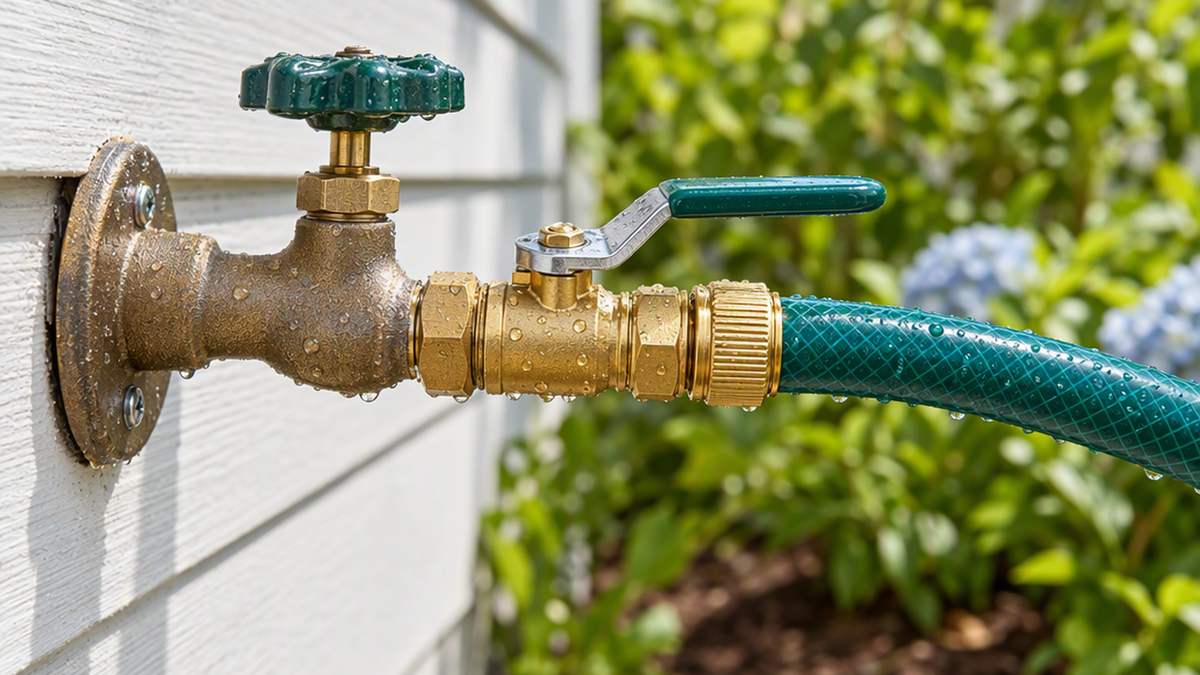
If you have ever walked back to the spigot to turn the water off, or swapped a nozzle while water sprayed everywhere, you already know why a hose shut-off valve is worth having. It is a small fitting that screws between the faucet and the hose, or into the middle of a hose line, and lets you stop the flow right where you are working. This guide covers how a shut-off valve works, where to put one, and how to install it in a few minutes.
What a Hose Shut-Off Valve Does
A shut-off valve is a ball valve with a handle. Turn the handle one way and water passes through, turn it the other way and the flow stops. Most also let you partly open the handle to adjust flow. It does not replace your spigot. It adds a second control point so you are not forced to leave the water running at the faucet while you change attachments.
Common uses include:
- Swapping nozzles, sprinklers or spray wands without a soaked sleeve.
- Stopping the water at the end of a long hose without walking back to the house.
- Controlling a single branch when a splitter feeds multiple hoses.
- Isolating a hose that has a worn connection until you can fix it.
Where to Place the Valve
At the Spigot
This is the standard spot. Screwing the valve onto the faucet and connecting the hose to it means you can leave the spigot open and use the valve as the on/off control, which is convenient for short jobs. For long periods or when you are away, close the spigot itself so the hose is not under constant pressure.
At the Hose End
Putting a valve just before the nozzle lets you stop the flow at the work site. This is handy for filling buckets, washing the car, or watering beds far from the faucet.
On a Splitter
If you run more than one hose from one faucet, shut-off valves at each outlet let you use one line at a time. A splitter like the 4 Way Heavy Duty Brass Garden Hose Splitter with 4 valves already includes individual valves for this reason. We cover setup in more detail in our guide to using a 4-way garden hose splitter.
What to Look For When Buying
Not all valves are built the same. Check these points:
- Material. Solid brass resists corrosion and tends to last longer than plastic, especially outdoors.
- Thread size. Standard US garden hoses use 3/4 inch threads. Make sure the valve matches.
- Swivel connector. A swivel end lets you tighten the valve onto a faucet without twisting the hose.
- Comfortable handle. You will use it often, so it should be easy to grip and turn.
- Washers included. Rubber washers create the seal. A few spares are useful.
The Twinkle Star Water Hose Shut Off Valve 2 Pack checks these boxes according to its listing. It is made of solid brass, fits standard 3/4 inch US hose threads, has a swivel connector for attaching to a faucet, offers adjustable flow control, and includes 2 washers. The pack also includes 2 spiral hose kink protectors, which help protect a hose where it bends near the connection. It is listed as suitable for garden hoses, RVs, campers, boats, sprinklers and nozzles.
How to Install a Shut-Off Valve
- Turn off the water at the spigot and release pressure by opening the nozzle or old connection.
- Remove the hose from the faucet by turning the coupling counterclockwise.
- Check the washer. Inside each female coupling is a rubber washer. If it looks cracked or flat, replace it. Most leaks come from a worn or missing washer.
- Close the valve handle before attaching it.
- Thread the valve onto the faucet. Turn the swivel collar clockwise until snug. Hand tight is usually enough. Over-tightening with tools can crush the washer.
- Attach the hose to the valve outlet the same way.
- Open the spigot slowly, then open the valve. Check both connections for drips.
- Adjust if needed. If you see a slow drip, tighten a quarter turn, or replace the washer.
Troubleshooting Common Problems
Dripping at the Connection
Usually a washer issue. Replace the washer and make sure the threads are clean. Our guide to fixing a leaking hose connection covers more fixes.
Handle Is Hard to Turn
Mineral buildup can stiffen a valve. Rinse it, open and close it a few times, and avoid forcing it.
Low Water Flow
Check that the handle is fully open, the hose is not kinked, and the faucet is open all the way. A kink protector at the connection point can help prevent sharp bends.
Winter Care
Brass is durable, but trapped water can freeze and expand. Before the first freeze, disconnect valves and hoses, drain them and store them indoors. See our guide to winterizing your hose and outdoor faucets for the full process.
Build a Better Watering Setup
A shut-off valve is one of the cheapest upgrades you can make to a hose setup, and it pairs well with quick connectors and a good nozzle. Browse the full range of garden watering and hose fittings to complete your setup, or check our best sellers to see what other gardeners are choosing.