
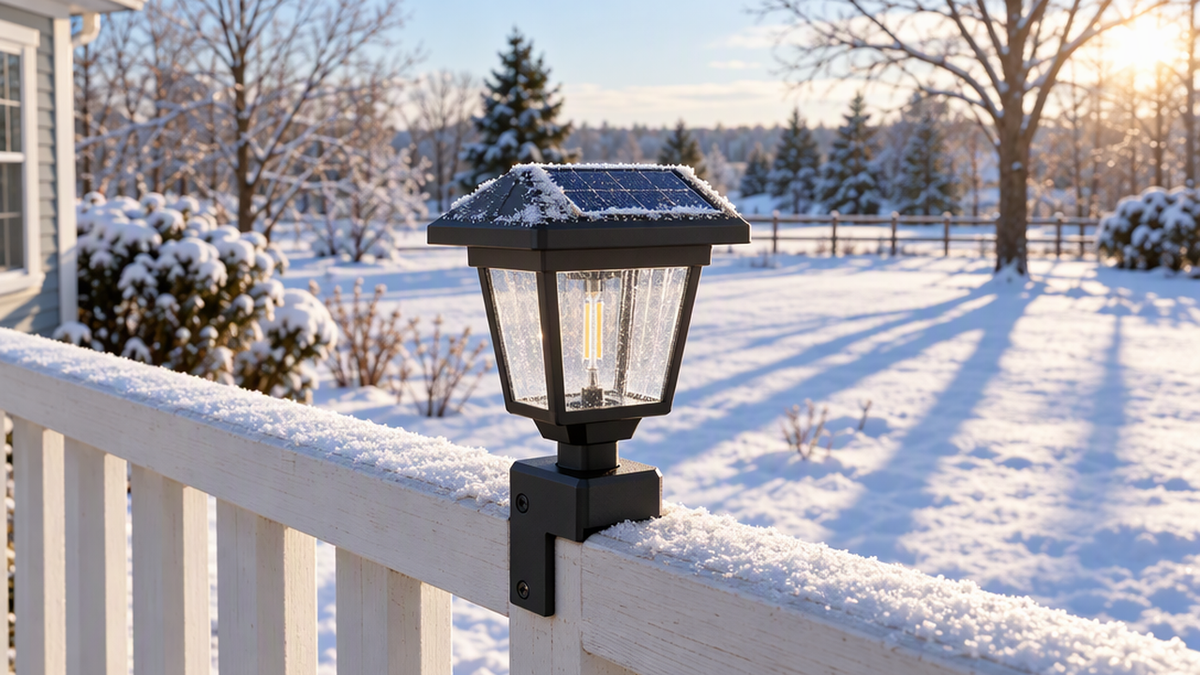
When the clocks change and the days shorten, a common question comes up: do solar lights still work in winter? The short answer is yes, but with some limits. Solar lights charge from daylight, not heat, so they can keep working in cold weather. What changes is how much light the panel collects and how long the batteries can run. Understanding that difference helps you set realistic expectations and make small adjustments that keep your garden glowing through fall and winter.
Why Winter Changes Solar Performance
Three things shift when the season turns. First, there are fewer daylight hours, so the panel has less time to charge. Second, the sun sits lower in the sky, so shadows from trees, fences and rooflines get longer and can block the panel for much of the day. Third, nights are longer, so the lights need to run for more hours on a battery that may not be full.
The result is that a light that ran all night in summer may fade earlier in winter. That is normal and not necessarily a defect. Cloudy days make it more noticeable, because the panel still charges but more slowly.
Placement Is the Biggest Fix
Moving a light a few feet can make a bigger difference than any accessory. Look for the spot that gets direct, unshaded sun for as much of the day as possible. In winter that is usually the south-facing side of your yard in the Northern Hemisphere.
- Check shade at midday, not only in the morning, since low winter sun casts long shadows.
- Keep panels clear of fallen leaves, frost, snow and dirt. Wipe them with a soft damp cloth.
- Avoid placing lights under porch roofs or dense evergreens if you want them to run all night.
Our guide to solar lights that are not working covers more troubleshooting steps if a light seems dim or stays off.
What to Expect From a Decorative Solar Lantern
Specs from the listing help set expectations. The 34 Inch Hanging Solar Lanterns with Shepherd Hooks use a built-in light sensor, so they turn on automatically at night and off at dawn. They have warm white LEDs rated at 4 lumens and are described as designed mainly for decoration, giving a gentle glow rather than bright security lighting. The listing gives a charging time of 6 to 8 hours with enough sunlight and a working time of 8 to 10 hours, and it notes that charging and working time change with the weather.
The solar panel is rated IP44 and the listing states the lanterns are suitable for rain, snow and frost, except for a rainstorm, and can be used all year round. They use rechargeable AA Ni-MH batteries and come with 2 shepherd hooks.
In winter, treat run time as a range. After a bright day you may get the full night, and after a gray one you may get fewer hours.
Setup Steps That Matter More in Winter
- Remove the plastic tab. The listing notes there is a tab on the light cover that must be removed before charging. Forgetting it is a common reason a new light stays dark.
- Do a darkness test. Cover the solar panel with your hand. If the light turns on, the sensor and battery are working.
- Give the battery a full charge. The manufacturer suggests allowing at least 3 days and nights of charging and discharging if the light does not come on at first.
- Place in direct sun. Aim for about 8 hours of sun on the panel where possible.
- Soft ground only. The listing advises making sure the earth is soft enough before pushing the stake into it. In freezing weather, use a hanging spot or a pre-made hole instead of forcing it, so nothing breaks.
Use Lights for Mood, Not Heavy Duty Lighting
In winter, solar lights are at their best as ambient accents: along a path edge, on a porch hook, around a patio seating area. For tasks that need steady, bright output every night, such as lighting a dark stairway, consider a plug-in or hardwired option as a backup. Many people combine the two, using solar for atmosphere and a plug-in strand for the spots that matter most. If you are weighing options, see our comparison of solar vs plug-in outdoor string lights.
Keep Batteries Healthy
Rechargeable batteries lose capacity over time, and cold weather can reduce how much they deliver. If your lights seem noticeably weaker than last season, replace the batteries with the same type and size before replacing the whole light. Make sure the battery contacts are clean and dry. If you store lights for the coldest months, switch them off, clean the panel and keep them indoors.
Add Seasonal Charm
Short days are also when outdoor lighting matters most for atmosphere. Warm white lanterns pair well with wreaths, pumpkins and evergreen garlands. Browse our holiday and seasonal decorations to build a layered look, and check string lights and fairy lights for plug-in or battery options that complement your solar pieces.
Quick Checklist for Winter Solar Lights
- Move panels to the sunniest spot you have.
- Wipe off snow, frost, dust and leaves regularly.
- Remove protective tabs and test before installing.
- Expect shorter run times on cloudy days.
- Replace tired rechargeable batteries first.
Find Your Winter Solar Setup
Solar lights can keep working through the cold months when you place them well and set expectations for shorter run times. Ready to refresh your yard? Explore our outdoor and solar lights and find the right fit for your garden, path or porch.