The first hard freeze always seems to sneak up faster than expected, and a garden hose left connected to an outdoor faucet is one of the most common — and most avoidable — cold-weather casualties. Water left inside a hose or a hose bib expands as it freezes, which can split hose walls, crack brass fittings, and in the worst cases back up into the pipe behind the faucet and cause a leak you won't discover until spring. The fix takes about fifteen minutes and a few basic tools you probably already have on hand.
Why Winterizing Your Hose and Spigot Actually Matters
A garden hose is mostly water once it's been used, even if it looks empty. If that water freezes and expands inside the hose, it stretches the rubber or vinyl walls past their limit, leaving tiny cracks that won't show up until you turn the water back on next season and get a spray instead of a stream. Worse, a hose left attached to the spigot all winter can trap water in the pipe itself. Ice forming inside that section of pipe has nowhere to go, and the pressure can crack the faucet or the fitting behind your wall — a repair that costs far more than the few minutes it takes to disconnect and drain everything properly in the fall.
Step-by-Step: How to Winterize a Garden Hose
1. Shut off the water supply to outdoor faucets
If your home has an interior shutoff valve for the outdoor spigot (common in colder climates), close it first. This isn't always available on older homes or in milder regions, but if you have one, use it — it's the single best protection against a frozen and cracked hose bib.
2. Disconnect and fully drain the hose
Detach the hose from the faucet, then stretch it out in a straight line on a flat surface — a driveway or lawn works well — and lift one end to let gravity pull the remaining water through to the other end. Coiling a hose before it's fully drained just traps water in the low points, so don't skip this step. A hose with a built-in shut-off valve near the nozzle makes this easier, since you can crack the valve open and let trapped water escape without disconnecting the nozzle itself.
3. Clean and inspect fittings before storage
While the hose is drained, check the male and female ends for grit, worn rubber washers, or a fitting that's started to strip. Fall is a good time to swap out a worn washer or a corroded quick-connect fitting for a fresh one, rather than discovering the leak next spring when you actually need the hose. If you use quick-connect fittings on your hose, this is also the moment to pull them apart, rinse off any debris, and confirm the O-rings are seated properly so they don't seize up over the winter.
4. Store the hose somewhere it won't freeze solid
A garage, shed, or basement is ideal. If you have to store it outside, keep it off bare concrete and out of standing water, and loop it loosely rather than kinking it tightly — cold rubber and vinyl get brittle and can crack at sharp bends. A hose reel or a simple wall-mounted hanger keeps coils open and makes the whole process faster next time.
Protecting the Outdoor Faucet Itself
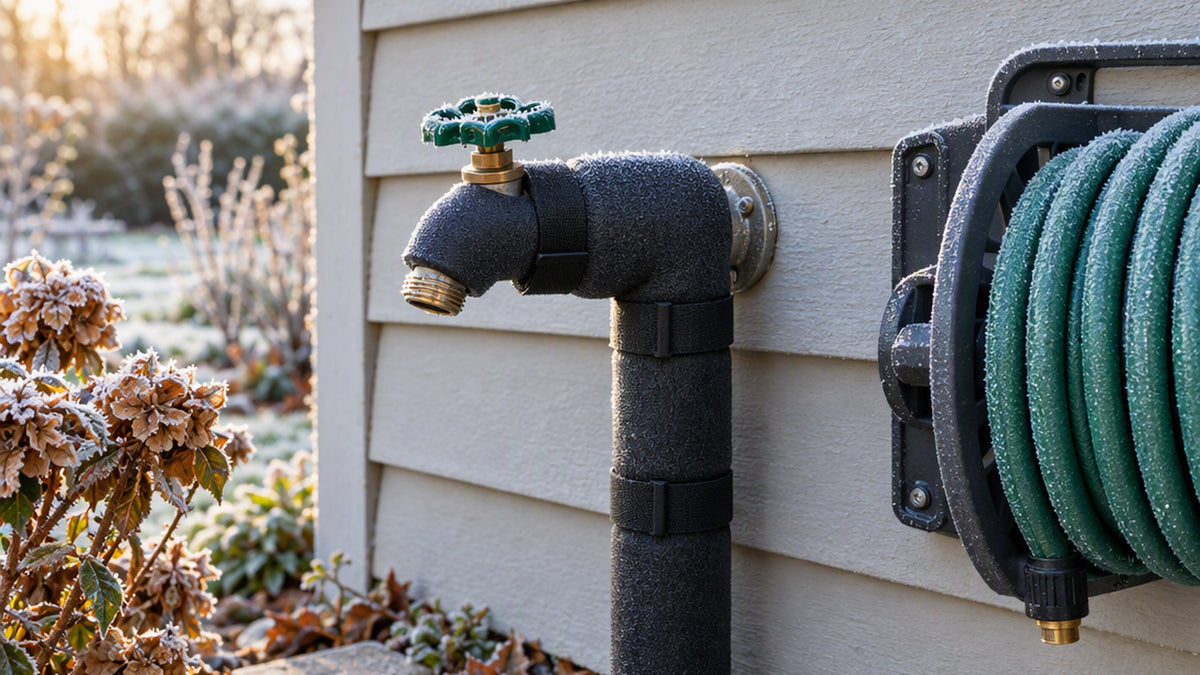
Once the hose is off, don't just leave the spigot as-is. Open the faucet briefly after shutting off the interior valve to let any residual water drain from the pipe, then leave it in the open position over winter — this gives any water still inside room to expand without building pressure. A foam faucet cover, available cheaply at any hardware store, adds an extra layer of insulation for spigots in especially cold regions.
If your spigot doesn't have an easy interior shutoff and you've had freeze problems before, installing a dedicated brass shut-off valve right at the connection point gives you a fast, reliable way to cut water to the hose end of the line each fall without touching any plumbing indoors. It's a five-minute install that pays for itself the first time it saves you a cracked fitting.
A Few Mistakes to Avoid
Leaving the hose attached "just in case" is the most common one — even a few warm days won't undo the risk once a real freeze hits. Coiling a hose that isn't fully drained is another: the water pools at the bottom of the loops and freezes there first. And skipping the fitting inspection means you might store away a hose with a fitting that was already halfway to failing, only to find out when you need it most next spring.
Get Set Up for Fall in Minutes
A properly winterized hose and faucet is one of the cheapest bits of home maintenance you can do, and having the right garden hose fittings and shut-off valves on hand makes it a five-minute job instead of a weekend project. Browse our full range of hose connectors, nozzles, and brass shut-off valves to get your outdoor watering setup ready for the cold — and ready to go again the moment spring arrives.