
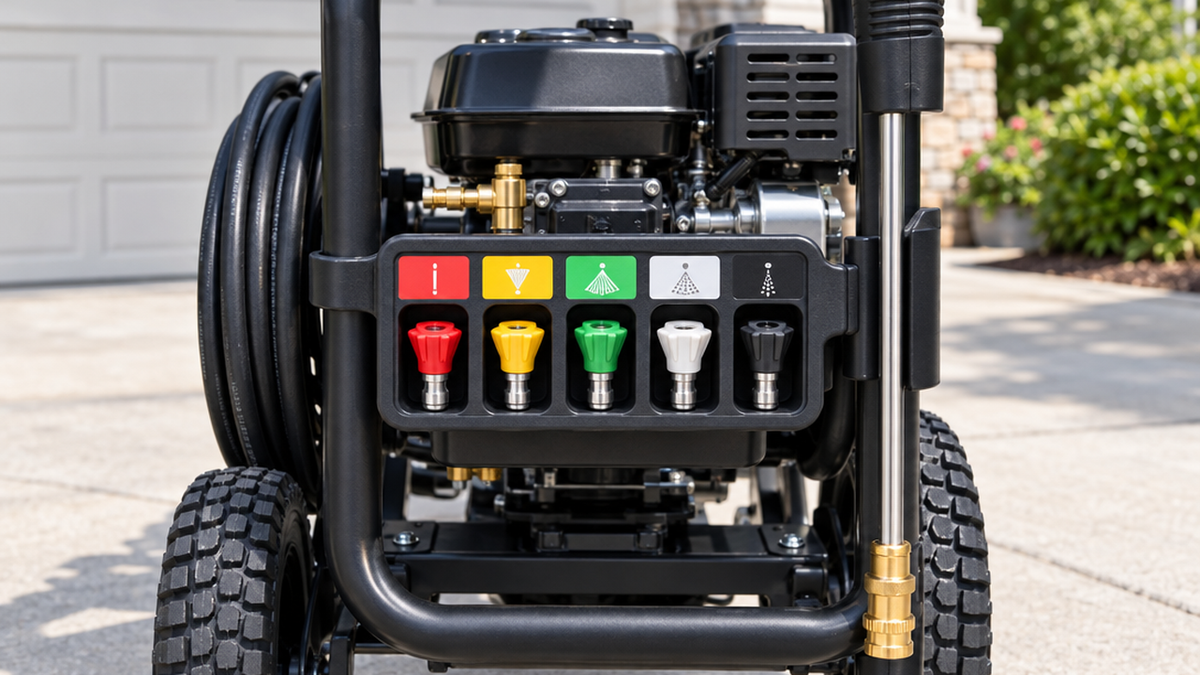
Pressure washer nozzles come in a rainbow of colors, and choosing the wrong one is the fastest way to gouge a wood deck, strip paint or waste an afternoon on a stubborn stain. The color is not decoration. It tells you the spray angle, which determines how concentrated the water is when it hits the surface. This guide explains what each color means and which jobs each one fits.
The Basic Rule: Smaller Angle Means More Force
Each nozzle tip is labeled by degrees, such as 0, 15, 25 and 40. A smaller number gives a narrow, focused jet that concentrates the pressure on a small spot. A larger number spreads the same water over a wider fan, which lowers the impact on any one area. When in doubt, start with a wider angle and move to a narrower one only if the surface can handle it.
Nozzle Colors and What They Do
Red, 0 degrees
The red tip produces a pencil-thin stream with the most concentrated force. It can cut into wood, damage siding and etch concrete, so most people rarely use it. Reserve it for very specific jobs, such as blasting mud from a distant spot or cleaning a hard, non-porous surface, and keep the wand several feet back.
Yellow, 15 degrees
The yellow tip gives a narrow fan that works well on tough jobs, like removing stuck-on grime from bare concrete or stripping rust from metal. It is strong enough to damage softer materials, so test on a hidden spot first.
Green, 25 degrees
Green is the general-purpose choice. It handles driveways, patios, walkways, fences and many outdoor furniture surfaces without being overly aggressive. If you only want to use one tip for most cleaning, this is the one.
White, 40 degrees
White is the gentle option. The wide fan suits vehicles, windows, painted surfaces, vinyl siding and delicate decking. It removes light dirt and pollen, and it leaves you room for error.
Black, soap tip
The black nozzle is a low-pressure tip that draws detergent into the water stream. You use it to apply cleaner, let it sit for a few minutes, and then switch to a rinse tip. It does not clean by force, which is why it is safe on nearly every surface.
Matching Nozzles to Common Jobs
- Concrete driveway: Green for the main pass, yellow for oil spots or stubborn stains. Our guide to pressure washing a concrete driveway explains technique.
- Wood deck: White or green, held at a wider distance and moved with the grain. Read our tips on washing a deck without damaging it.
- Vinyl or painted siding: White, plus the black tip for detergent.
- Cars and boats: White only, with plenty of distance.
- Brick or stone: Green or white, tested on a hidden section.
A Simple Technique That Protects Surfaces
- Attach the nozzle and squeeze the trigger away from the surface before you aim.
- Start about two feet back, then move in if you need more cleaning power.
- Hold the wand at a slight angle rather than straight on.
- Use overlapping, sweeping passes instead of lingering in one spot.
- Rinse from the top down so dirty water does not streak cleaned areas.
Get a Full Set So You Always Have the Right Tip
Buying one nozzle limits you, because different surfaces around the house really do need different angles. The Twinkle Star pressure washer nozzle tip set includes the black soap nozzle and red, yellow, green and white tips, all sized for 1/4 inch quick connect fittings, so you can swap angles in seconds. It is an inexpensive way to match every job.
Keep Your Fittings in Good Shape
Nozzle swapping is easy only if the quick connect seals properly. Worn rubber rings let water spray out around the joint and can make a washer feel underpowered. A pack of replacement rings, like the 40 pack of pressure washer O-rings, costs a few dollars and covers both 1/4 inch and 3/8 inch connectors. If pressure seems low, read our pressure loss troubleshooting guide before you blame the pump.
Shop Pressure Washer Accessories
Browse the full pressure washer parts and accessories collection for nozzles, adapters, hoses and seals that keep your machine working the way it should.