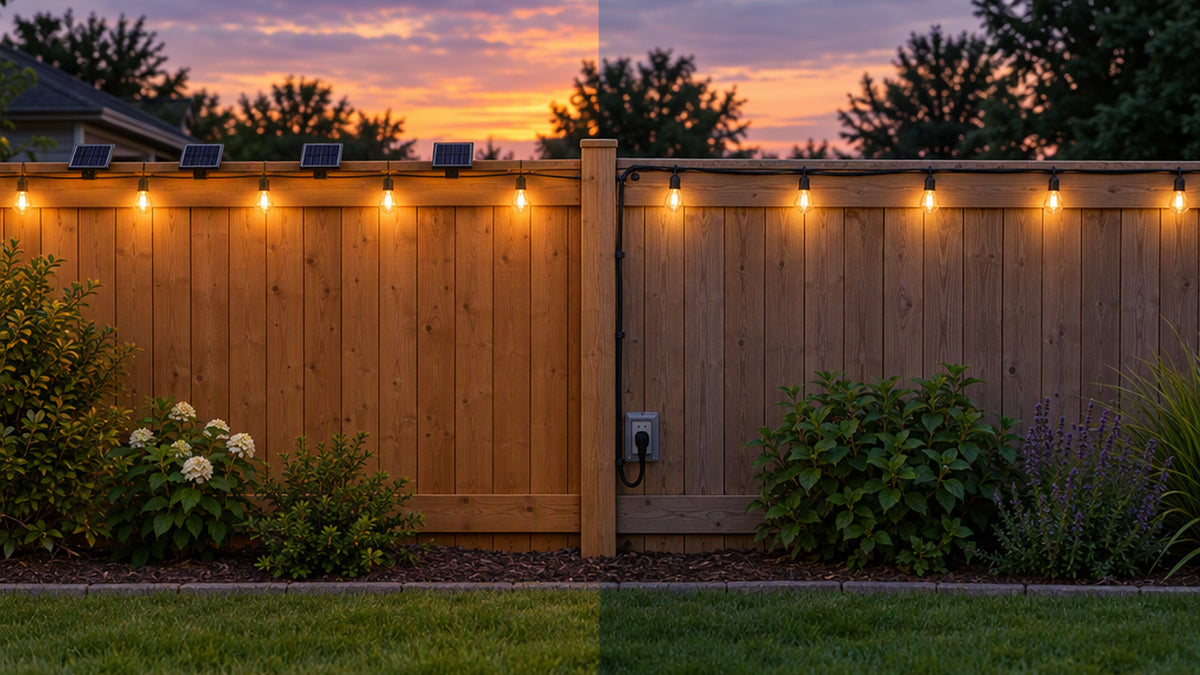
When you are planning outdoor lighting, the first decision is usually the power source. Solar lights promise easy installation with no cords, while plug-in string lights promise steady brightness every night. Both can look great, and the best yard often uses a bit of each. Here is how they compare so you can choose based on where and how you will use them.
How Solar Outdoor Lights Work
A solar light has a small panel that charges a built-in battery during the day. When daylight fades, a sensor switches the light on, and it runs until the battery drains or the sun rises. There is no wiring, no outlet and no electric bill, which makes solar lights ideal for places that are far from power.
How Plug-In String Lights Work
Plug-in lights connect to a standard outdoor outlet, often through an adapter or extension cord. Because they draw power from the house, they do not depend on weather or sun exposure. You can leave them on as long as you like, and a plug-in timer makes them automatic.
Side-by-Side Comparison
Brightness and consistency
Plug-in lights deliver the same glow every night. Solar brightness depends on how much sun the panel received that day, so a cloudy stretch can produce dimmer or shorter runs. If you want dependable lighting for dinners and gatherings, plug-in lights are the safer choice.
Installation
Solar wins on convenience. You stake a pathway light into the ground or hang a lantern from a hook and you are done. Plug-in strands need a nearby outlet, routing for the cord and a little planning to keep connections dry. Our guide to hanging outdoor string lights without a pergola shows how to handle the cord side neatly.
Running cost
Solar lights have no ongoing electricity cost. LED plug-in strands use very little power, so the cost of running them is small, but it is not zero. Either way, the main expense is the initial purchase and eventual replacement of batteries in solar models.
Placement flexibility
Solar is best for gardens, pathways, driveways and fence lines, where running a cord would be awkward. Plug-in is best for patios, decks, pergolas and porches, where an outlet is close and you want dependable light over a seating area.
Lifespan and upkeep
Solar lights need a clean panel with direct sun, and the rechargeable battery eventually wears out. Plug-in lights need connections kept dry and cords protected from damage. If a solar light stops behaving, try the steps in our article on fixing solar lights that stop working.
Which One Should You Choose?
- Choose solar for pathways, flower beds, fences, and any spot more than a few feet from an outlet.
- Choose plug-in for patios, decks, porches and entertaining areas where reliability matters most.
- Use both if you want a safe lit path from the driveway and a bright, dependable space around the table.
Our Picks for Each Use
For a hands-off garden accent, the 34 inch hanging solar lanterns with shepherd hooks, 2 pack give you a soft, warm glow without any wiring. For a consistent glow over a porch, fence or doorway, the 100 LED star string lights plug in and offer 8 lighting modes. Mixing the two gives you a yard that is both practical and inviting.
Tips for Getting the Best Results From Either Type
- Place solar panels in direct sun. Even nearby shade from a tree or eave can shorten the run time.
- Turn new solar lights on and let them charge fully before judging brightness.
- Use a timer with plug-in lights so they switch on at dusk and off at bedtime.
- Keep connections off the ground and away from standing water.
- Clean panels and bulbs occasionally with a damp cloth.
Plan Your Lighting
Browse our outdoor and solar lights collection for options that need no outlet, and pair them with strands from our string lights and fairy lights collection for the areas that need steady glow.