
Why Deck Cleaning Needs a Different Approach Than Concrete
A pressure washer is one of the fastest ways to strip years of grime, algae, and mildew off a wood deck — but it's also one of the fastest ways to gouge, splinter, and strip the surface of the boards if you use the settings meant for a concrete driveway. Wood is soft compared to concrete or pavers, and a jet of water at the wrong PSI or the wrong distance can tear right through the grain. The good news is that cleaning a deck safely just takes a bit more care with your nozzle, pressure, and technique, not entirely different equipment — most of what you need is already in our pressure washer parts and accessories collection.
Choosing the Right Nozzle Tip for Wood
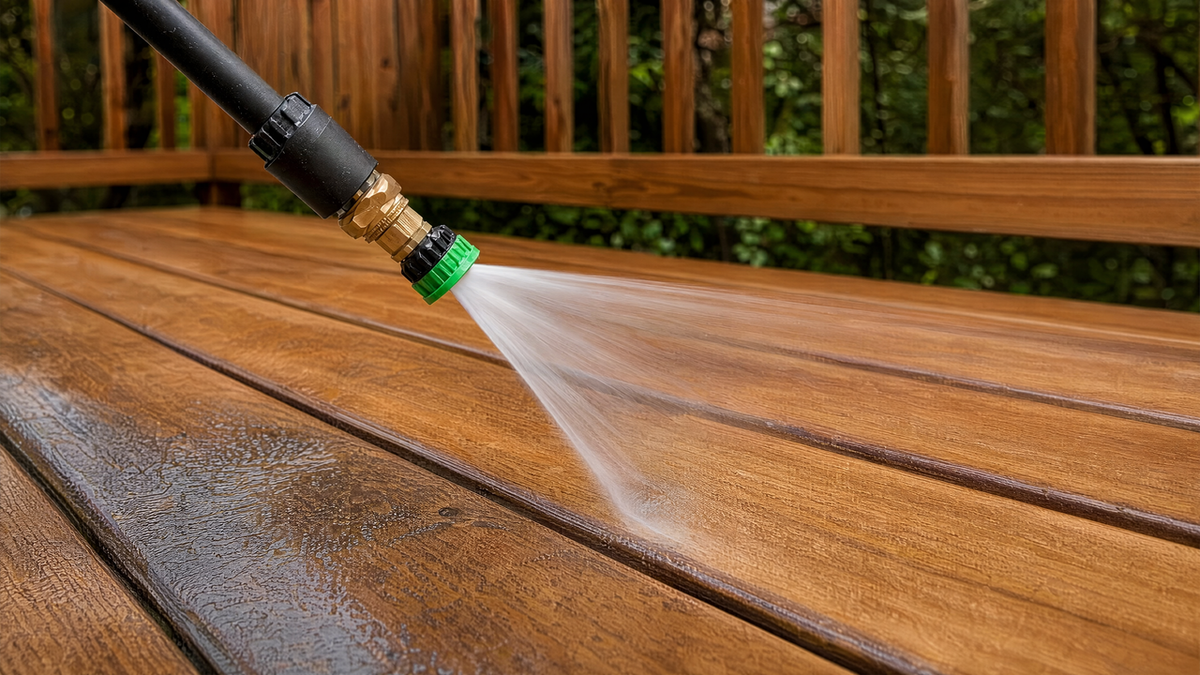
Nozzle tips are typically color-coded by spray angle, and the angle matters more than almost anything else when it comes to protecting wood. A 0-degree red tip or a 15-degree yellow tip concentrates water into a narrow, aggressive stream that can etch lines directly into softwood decking in seconds. For deck cleaning, a 25-degree green tip or a 40-degree white tip is almost always the safer choice, spreading the water over a wider area so no single spot takes the full force of the jet. A set like these pressure washer nozzle tips in multiple degrees gives you the full range, including a soap nozzle for applying deck cleaner at low pressure before you rinse.
Step-by-Step: How to Pressure Wash a Deck Safely
Clear and Prep the Deck
Move furniture, planters, and rugs off the deck, and sweep away loose debris and leaves from between the boards. If you're using a deck cleaning solution, apply it first with a low-pressure soap nozzle and let it sit for the time recommended on the label — this loosens grime chemically so you don't have to rely on pressure alone to remove it.
Choose Your PSI and Nozzle Angle
For most residential wood decks, 500-1200 PSI is the safe working range, well below what you'd use on concrete. Start with your widest nozzle angle (a 40-degree white tip) and the lowest effective pressure, then only step up if the wood genuinely isn't coming clean. It's much easier to make a second pass than to sand out a gouge afterward.
Wash With the Grain
Always move the nozzle in the direction of the wood grain, not across it or at an angle. Spraying across the grain forces water and pressure into the fibers unevenly, which is what causes that fuzzy, "feathered" look on damaged decking. Keep the nozzle moving steadily rather than holding it in one spot, and stay at least 8-12 inches away from the surface.
Rinse and Let Dry
Once the deck is clean, do a final rinse pass at the same low pressure to clear away any remaining cleaner or loosened debris, then give the wood at least 24-48 hours to dry fully before applying any stain or sealant. Pressure washing opens up the wood grain, and sealing over damp wood can trap moisture underneath the finish.
Mistakes That Damage Wood Decks
The most common damage comes from holding the nozzle too close, using too narrow a spray angle, or lingering in one spot too long — all three concentrate force in a small area faster than softwood can handle. Pressure washing in direct sun on a hot day can also cause the wood to dry unevenly and warp slightly, so an overcast morning or evening is usually a better window for the job.
Composite vs. Wood Decking: What Changes
Composite decking is more forgiving of moderate pressure than real wood, but it's not indestructible — most manufacturers still recommend staying under 1500-3100 PSI with a wide fan tip, since narrow jets can strip the protective outer layer and expose the material underneath to UV damage. When in doubt, check your decking manufacturer's specific pressure washing guidance before you start, since warranties can be voided by using too much pressure.
How Often Should You Pressure Wash a Deck?
Most wood decks benefit from a thorough pressure wash once a year, typically in spring before you reapply stain or sealant, or in fall once you've stopped using it for the season. Decks in shaded, damp spots that develop algae or mildew faster may need a light cleaning twice a year to stay ahead of buildup, while a deck that gets full sun most of the day can often go longer between deep cleans. Sealant matters here too — a freshly sealed deck sheds water and dirt more easily, so keeping up with sealing every 1-3 years (depending on the product and your climate) reduces how much pressure washing the wood actually needs over time.
Gear That Makes the Job Easier
Beyond the right nozzle, a longer hose gives you the reach to clean an entire deck without repositioning your machine every few minutes. A 25ft pressure washer hose with a quick-connect fitting makes it easy to swap between your regular concrete nozzle and a wood-safe tip mid-job without disconnecting and reconnecting at the machine itself.
Find the right nozzle tips, hoses, and fittings for your next cleaning project in our pressure washer parts and accessories collection.