
A pressure washer losing pressure is frustrating because the machine sounds fine, water is coming out, and yet the driveway is not getting clean. In most cases the pump is not the problem. Low pressure, pulsing pressure or a stream that fades in and out almost always traces back to something simple and cheap: a clogged nozzle, an air leak on the water inlet, a tired O-ring at a quick connect, or a hose that is too long or too narrow for the job. This guide walks through the checks in the order that finds the problem fastest, from the free fixes to the parts you might need to replace.
Start With the Water Supply
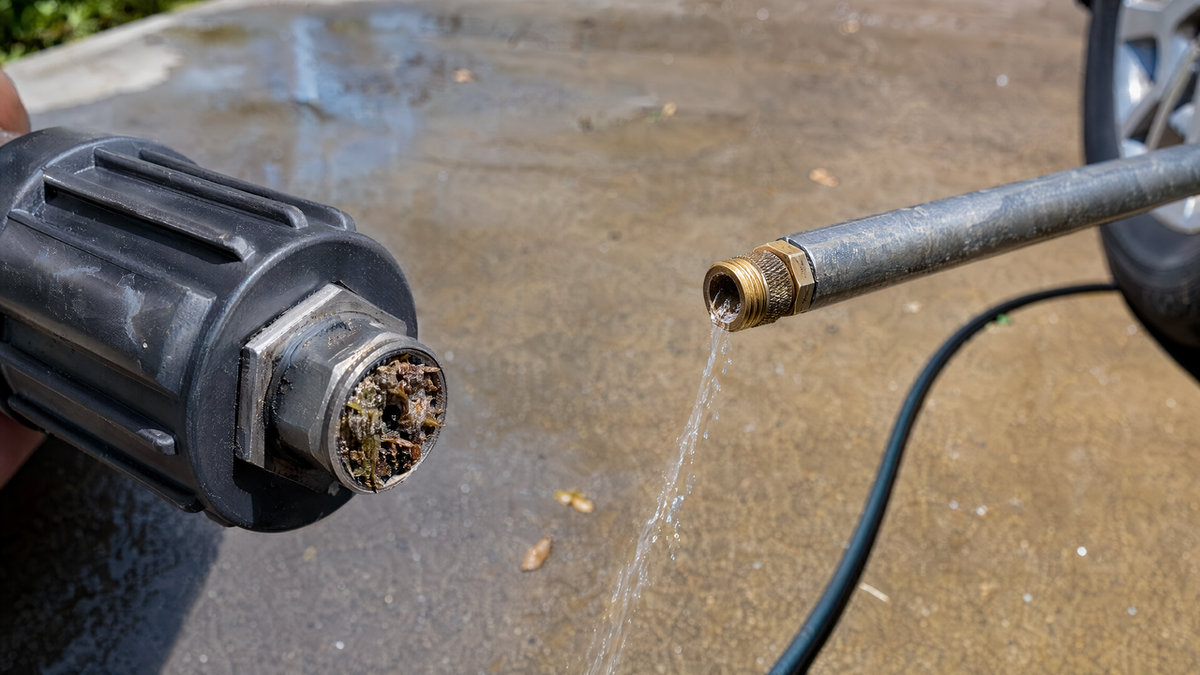
A pressure washer cannot put out more water than it takes in. If the garden hose feeding the machine is kinked, partly closed at the spigot, or shared with a sprinkler, the pump starves and pressure drops or pulses. Before you touch anything on the washer, do three things: open the spigot all the way, straighten the supply hose, and disconnect any splitter or nozzle between the tap and the machine. Then check the inlet screen where the garden hose attaches to the pump. A small mesh filter sits there and it collects sand and scale. Pull it out, rinse it, and put it back.
Supply hose size matters too. A 5/8-inch hose is the minimum for most residential washers; a 1/2-inch hose or a hose over 100 feet long may not deliver enough gallons per minute, and the result looks exactly like a failing pump.
Purge Air From the System
Air trapped in the pump is the most common cause of pulsing or surging pressure, and it is free to fix. With the engine or motor off, connect the supply hose, turn the water on, and squeeze the trigger on the wand until a steady stream with no sputtering comes out. Only then start the machine. Repeat this any time you have disconnected the supply hose or run the washer dry. If air keeps getting in even after purging, look for a loose connection or a worn washer on the inlet side; a leak that lets water out under pressure will let air in under suction.
Check the Nozzle
A pressure washer nozzle has a tiny orifice, and it takes very little debris to partly block it. The symptoms are a weak, uneven fan pattern and higher-than-normal pressure building in the hose before the trigger is pulled. Remove the nozzle tip and hold it up to the light. If the opening is not perfectly clear, clean it with the wire pick that came with the machine or a straightened paper clip, then flush it backward with water from a garden hose.
Also make sure you are using the right tip for the job. A 40-degree white tip spreads the same water over a wide fan, so it feels much weaker than a 15-degree yellow tip even though the pump is producing identical pressure. If a tip is worn, meaning the orifice has eroded and grown, the fan pattern goes ragged and pressure drops for good. Tips are inexpensive; a five-piece nozzle tip set replaces the full range in one go. Our guide to nozzle colors and what each one is for explains which tip to reach for on each surface.
Inspect Every Quick Connect O-Ring
Here is the leak most people miss. Every quick connect fitting on a pressure washer, at the pump outlet, at both ends of the high-pressure hose, at the gun and at the wand, seals with a small rubber O-ring. Those O-rings dry out, flatten and crack, especially after a winter in an unheated garage. A worn O-ring leaks a fine spray at the fitting, and because that leak is on the pressure side, it takes pressure with it. Sometimes the fitting is not visibly leaking but the O-ring is still letting air in when the pump is pulling.
Pull each fitting apart and look at the ring. If it is flat, nicked, hard or missing, replace it. A 40-pack of 1/4-inch and 3/8-inch O-rings covers every fitting on a typical machine several times over and costs less than a single trip to the hardware store. Replacing all of them at the start of each season is a fifteen-minute job that prevents most mid-summer pressure complaints.
Look at the High-Pressure Hose
The high-pressure hose is the one between the pump and the gun. Three things go wrong with it. A kink or a crushed section restricts flow and cuts pressure at the wand. A pinhole or a split at the crimp sprays water and drops pressure fast, and it is a safety issue because that water is coming out at thousands of PSI. And a hose that is much longer or narrower than the machine was designed for loses pressure to friction over its length. If you have added a 50-foot extension to reach the far side of the house, that alone can explain a noticeable drop.
A damaged high-pressure hose should be replaced rather than taped or clamped. A 25-foot 3/8-inch steel-braided replacement hose rated to 4000 PSI fits most residential and light commercial machines with 3/8-inch quick connects, and the 3/8-inch inside diameter keeps friction loss low. If your machine uses M22 threaded fittings instead, an adapter kit converts it to quick connect in a minute. Everything for that swap lives in the pressure washer parts and accessories collection.
Unloader Valve and Pump: When It Is Actually the Machine
If the supply is good, the system is purged, the nozzle is clean, the O-rings are fresh and the hose is intact, the problem moves inside the machine. The unloader valve regulates pressure and recirculates water when the trigger is released; a stuck or worn unloader causes low pressure or pressure that drops after a few seconds of spraying. On many machines it can be adjusted or the internal spring and seals replaced. Pump valves and seals wear too, particularly on machines that have been run without water or stored with water inside over a freeze. These repairs are still doable at home with a rebuild kit, but they are beyond a five-minute fix, and on an inexpensive electric washer a new pump often costs about the same as the parts.
A Quick Diagnostic Order
- Pressure pulses or surges: air in the pump or a supply restriction. Purge and check the inlet.
- Pressure is steady but low everywhere: supply hose too small, inlet screen clogged, or high-pressure hose too long.
- Fan pattern is ragged or narrow: clogged or worn nozzle tip.
- Visible spray at a fitting: O-ring. Replace it.
- Pressure drops after a few seconds of spraying: unloader valve.
- Nothing above helps: pump seals or valves.
Work through that list from the top and you will find the cause of a pressure washer losing pressure in the first three steps far more often than not.
Need O-rings, tips or a replacement hose? Everything for a fifteen-minute pressure tune-up is in our Pressure Washer Parts & Accessories collection.