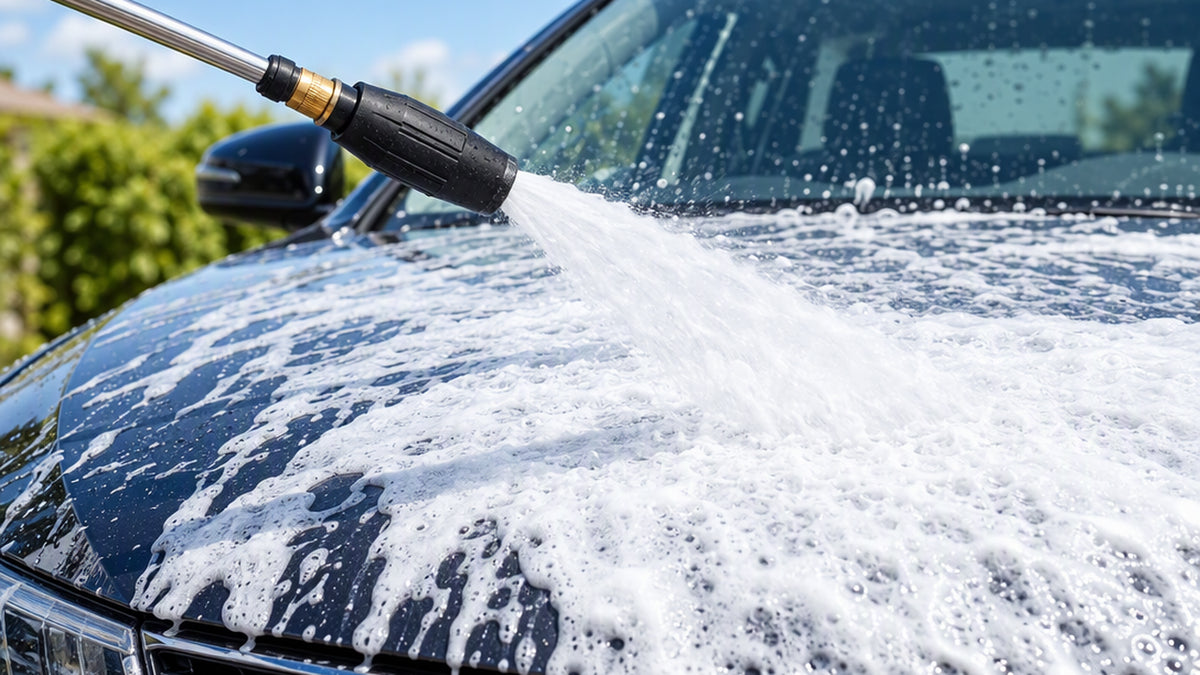
If you have ever tried to wash a car, a deck or a patio with just a high-pressure jet, you know it only goes so far. Dirt, algae and grease often need a cleaning solution to loosen them before the rinse. That is what a soap nozzle is for. It lowers the pressure at the tip so detergent can be applied gently and evenly, and you then switch to a narrower tip to rinse it away. This guide explains how the process works, which tip to use at each stage, and how to avoid the mistakes that cause streaks or damage.
What a Soap Nozzle Actually Does
Most pressure washers draw detergent through a siphon when a low-pressure nozzle is attached. A soap nozzle has a wider opening, which reduces the pressure at the tip and lets the machine pull cleaning solution from a bottle or detergent tank into the water stream. A high-pressure tip does not create the same suction, which is why soap often will not flow unless you switch to the right nozzle.
The soap nozzle is normally black in the standard color-coded system. If you want a refresher on the other colors, our guide on pressure washer nozzle colors covers each one.
What You Need
- A pressure washer with a detergent siphon or tank
- A soap nozzle and a set of rinse tips
- A detergent made for pressure washers and for the surface you are cleaning
- Eye protection and closed-toe shoes
A simple way to get everything in one purchase is a nozzle set. Our pressure washer nozzle tips set includes a black brass soap nozzle plus four stainless steel tips: red (0 degree), yellow (15 degree), green (25 degree) and white (40 degree). The listing describes a 1/4 inch quick connection design rated for 2.5 GPM and up to 4000 PSI, and notes it is only suitable for a pressure washer gun or wand. Check that your wand uses a 1/4 inch quick connect before ordering.
Step-by-Step: Washing With Soap
1. Prepare the Area
Sweep loose debris, move furniture and cover nearby plants or delicate surfaces if your detergent has a warning. Read the detergent label for dilution and the surfaces it is safe on.
2. Attach the Soap Nozzle
Release the trigger, pull back the collar on the wand and push the black soap nozzle in until it clicks. Tug lightly to make sure it is locked. Never change tips while the trigger is squeezed or the machine is under pressure.
3. Apply Detergent
Start the machine and squeeze the trigger. Work from the bottom of vertical surfaces to the top so the soap does not streak down clean areas, and overlap each pass slightly. Let the cleaner sit for the time the label recommends, usually a few minutes. Do not let it dry on the surface, especially in direct sun.
4. Switch to a Rinse Tip
Release the trigger and swap to a rinse tip. For most home surfaces, the green 25 degree or white 40 degree tip is a good starting point because it covers a wider area with less force. The yellow 15 degree is more aggressive and better for tough stains on durable surfaces like concrete. The red 0 degree is a narrow, powerful jet that can damage surfaces, so most homeowners should avoid it.
5. Rinse From Top to Bottom
Rinse in overlapping strokes, working from the top down so dirty water runs over areas you have not rinsed yet. Keep the tip a consistent distance from the surface, and start farther away, moving closer only if needed.
Common Mistakes to Avoid
- Using too much pressure on soft materials. Wood, painted siding and vehicle paint can be damaged by narrow tips. Start with the widest tip.
- Letting soap dry. Dried detergent can leave streaks or film. Work in smaller sections, and rinse before it dries.
- Mixing chemicals. Never combine detergents, and use only products made for pressure washers.
- Forgetting to flush the system. After using soap, run clean water through the machine for a minute to clear the detergent line.
- Skipping the safety basics. Never point the wand at people or pets, and keep your hands clear of the spray.
Check Your Hose and Fittings Too
A soap job is also a good time to check the equipment. Look for cracks or bulges in the hose, and make sure the quick connects are not dripping. If you need a longer reach, the 25ft pressure washer hose is a steel-wire braided rubber hose with 3/8 inch quick connect fittings. The listing gives a maximum working pressure of 4000 PSI and says it is for pressure washers only, not as a garden hose. If you notice leaks at the connectors, our article on fixing a leaking quick connect walks through the O-ring replacement.
Cleaning and Storing Your Nozzles
Rinse each tip with clean water after use and, if a nozzle clogs, clear the opening with a pin or the cleaning tool that came with your machine. Dry the tips and keep them in a small case so they do not get lost. A clogged tip can cause uneven spray patterns and put extra strain on the pump.
Final Thoughts
A soap nozzle is simple, but using it correctly makes a big difference in how clean the job looks. Apply the detergent with low pressure, give it time to work, then rinse with the right tip from top to bottom. If you are building out your set of accessories, browse our pressure washer parts and accessories for nozzles, hoses and connectors.