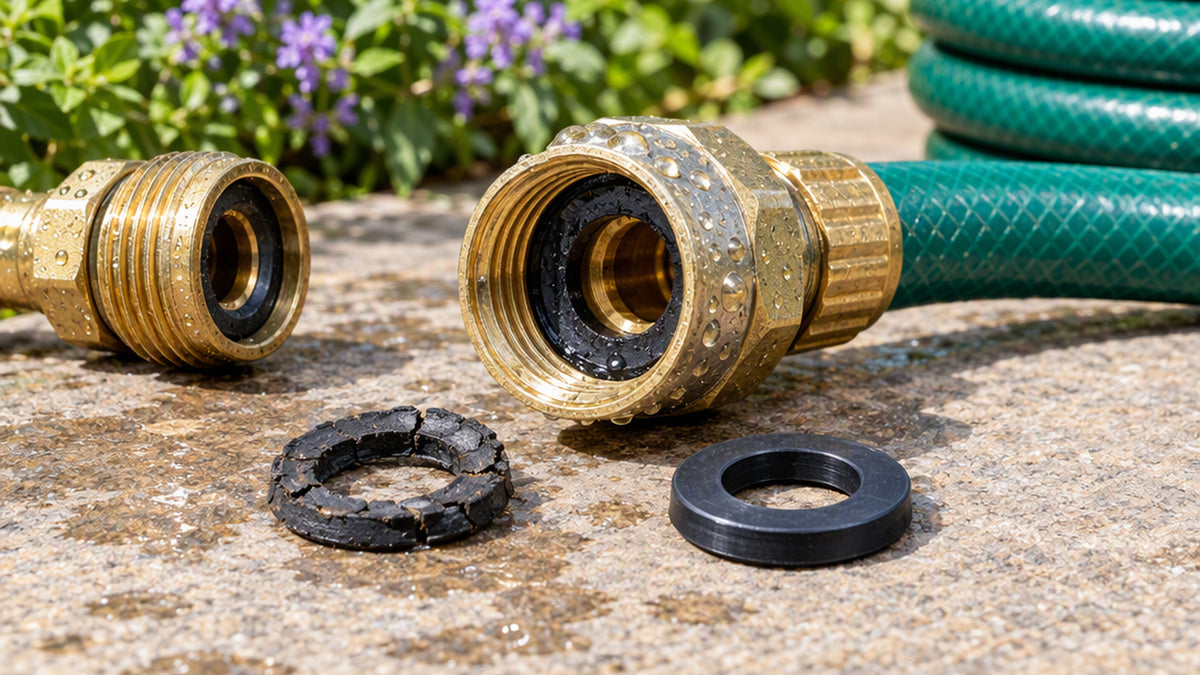
A garden hose that sprays water from the connection instead of the nozzle is one of the most common little annoyances in the yard. The good news is that the fix is usually quick, cheap and does not require a plumber or a new hose. In most cases, a worn or missing rubber washer is the culprit. This guide shows you how to find where the leak is coming from, replace the washer properly, and keep it from happening again.
First, Find Where the Water Is Escaping
Before you change anything, turn the water on and watch. Leaks tend to show up in one of three places:
- At the spigot. Water dribbles down the tap where the hose screws on.
- At the hose end. Water sprays or drips where a nozzle, sprinkler or quick connector attaches.
- Along the hose. A pinhole or crack in the hose itself, which needs a repair coupling or a new hose.
If the leak is at a connection point, the washer is the first thing to check. That small rubber ring inside the female end of every standard hose fitting creates the seal. When it dries out, flattens, cracks or falls out, water finds its way through the threads.
What You Need
- A replacement rubber hose washer (standard 3/4 inch size)
- A small flat screwdriver or the tip of a pick to remove the old washer
- A clean cloth
Many hose connector sets include spare washers. For example, our 3/4 inch quick connector set (4 male, 4 female) comes with 4 extra rubber washers, which is handy to keep in the garage drawer.
Step-by-Step: Replace the Washer
1. Turn Off the Water and Disconnect
Shut off the tap and unscrew the hose. If the end is under pressure, squeeze the nozzle to release it first. Always disconnect accessories when you are not using them, and avoid leaving them under pressure for long periods.
2. Remove the Old Washer
Look inside the female coupling. If a washer is there, pry it out gently with the screwdriver. If it is stuck, work around the edge rather than stabbing it. If there is nothing inside, you have found your problem: a missing washer causes the vast majority of leaks at this joint.
3. Clean the Fitting
Wipe out the inside of the coupling and check the threads for grit or corrosion. A little dirt can stop a new washer from seating flat.
4. Seat the New Washer
Press the new washer flat into the bottom of the coupling so it sits evenly with no twists. It should sit snug and not bulge out.
5. Reconnect and Hand-Tighten
Thread the fitting back on and tighten by hand. You do not need a wrench; over-tightening can crush the washer and cause a new leak. Turn the water on slowly and check the joint.
If It Still Leaks: Other Causes
The wrong size. Standard US garden hoses use 3/4 inch threads. If you are connecting to something that uses a different size, you need an adapter. Check the fitting before you buy.
Damaged threads. Cross-threaded or bent threads will not seal even with a new washer. In that case, replace the fitting.
Loose or worn quick connectors. Quick connectors rely on the same washer seal. If leakage appears after long-term use, the product guidance for our quick connector sets is to replace the rubber washer. Make sure connectors are properly oriented and sealed with their rubber rings during installation.
A kinked or worn hose end. If the hose collar has split or the hose has pulled out of the coupling, replace the end or the hose.
Add a Shut-Off Valve to Reduce Wear
Leaks often start when the tap is left on and water pressure sits on the hose all day. A shut-off valve at the spigot lets you turn the flow off at the source without walking back to the tap. Our brass hose shut-off valve (2 pack) is a solid brass 3/4 inch connector that includes 2 washers, and the listing notes swivel connectors for attaching to a faucet and adjustable flow control. If you want to go deeper on installation, see our guide on how to install a garden hose shut-off valve.
Tips to Prevent Future Leaks
- Keep spare washers on hand. They are small, inexpensive and make a five-minute repair out of a frustrating afternoon.
- Disconnect when not in use. Taking the hose off the spigot between uses takes pressure off the washers.
- Drain and store properly. Before the first hard freeze, drain the hose and disconnect it to prevent damage from freezing water.
- Hand-tighten only. Snug is enough. A wrench is rarely needed.
- Replace washers once a season. If your hose is in constant use, change them every spring.
A Note on Quick Connectors
Quick connectors can make life easier by letting you swap between a nozzle, a sprinkler and a wand without threading and unthreading each time. They still depend on a good washer seal, so treat them the same way: check the washer when you see drips. Our product details also note that these fittings are designed for outdoor use and cold water only, and are not suitable for drinking water.
Stock Up on Hose Fittings
Whether you need a spare set of washers, a new connector or a shut-off valve, you can browse the full range in our garden watering and hose fittings collection. A few spare parts now can save you a trip to the hardware store the next time a connection starts to drip.