
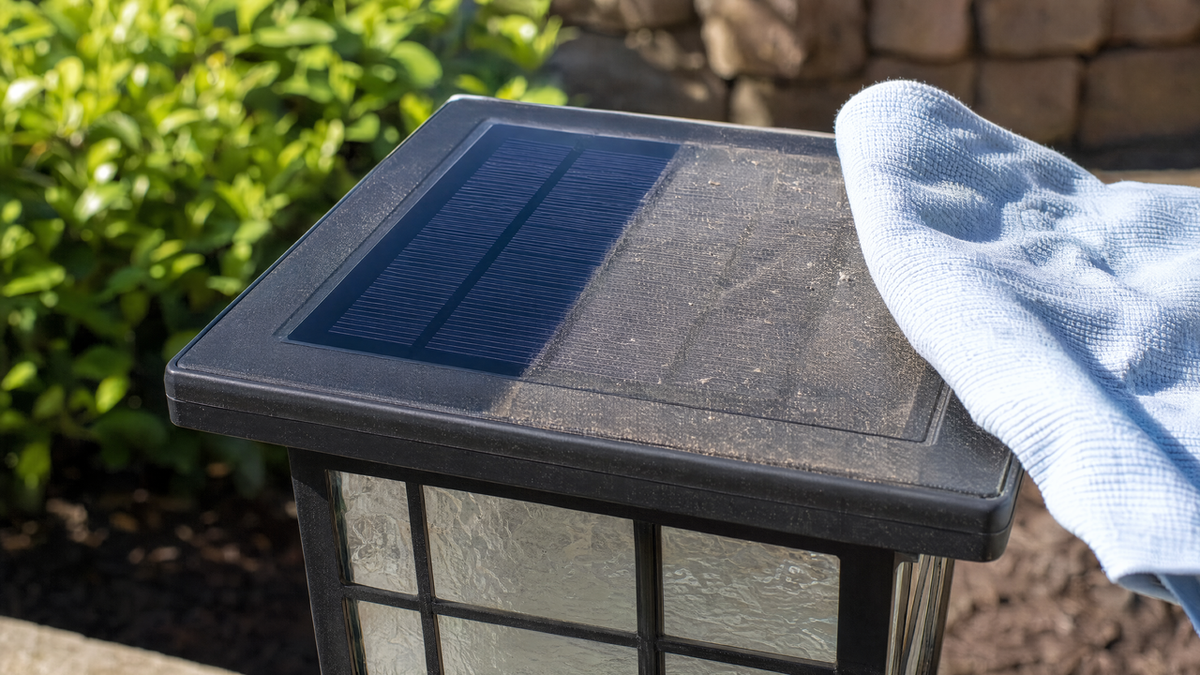
Solar lights not working is the most common complaint about outdoor lighting, and it is usually not because the light is broken. Most solar lights that go dark have one of five simple problems: a dirty or shaded panel, a tired rechargeable battery, a switch that was never turned on, moisture in the housing, or a nearby light source telling the sensor it is still daytime. Fall is when these problems show up, because the days get shorter and the sun sits lower, so a light that was fine in July suddenly stops lasting through the evening in October. Here is how to diagnose each cause and fix it, plus how to tell when a light really is done.
1. Check the Switch and the Pull Tab
It sounds obvious, but a large share of "dead" new solar lights simply were never switched on. Most models have a small on/off switch on the underside of the head or behind a cap, and many ship with a plastic pull tab between the battery and the contacts to keep them from draining in the box. Remove the tab, flip the switch to on, and cover the panel with your hand. If the light comes on when the panel is dark, it works and the issue is charging, not the light.
2. Clean the Solar Panel
The panel is the engine of the whole system, and it is small. A layer of pollen, dust, bird droppings, road grime or hard-water spots can cut the charge it collects by half or more. Wipe the panel with a damp cloth and a drop of dish soap, rinse, and dry. Do this every month or so during the growing season and once more after the leaves come down in fall. If the panel's clear cover has gone cloudy or yellow from years of sun, a gentle polish with a plastic headlight restorer can bring some of it back, but a badly hazed panel is usually the sign to retire the light.
3. Move the Light Into More Sun
Solar lights need six to eight hours of direct sun to charge fully, and that requirement gets harder to meet from September onward. A light that sits under a tree, against the north side of the house, or in the shadow of a fence at 3 p.m. may only get two or three hours of real sun, which is enough for a short glow and no more. Walk your yard around noon and again mid-afternoon and note where the shadows fall. Relocating a light three feet can double its charge. For pathway lights, the ones nearest the house or under overhanging shrubs are almost always the ones that fail first. Our guide to where to place solar lights in your yard has a full layout plan.
If a spot has no good sun at all, a light with a separate panel on a cord is the answer. Hanging solar lanterns with a detachable panel, like the 34-inch hanging solar lanterns with shepherd hooks, can hang in the shade while their panel sits in the sun.
4. Replace the Rechargeable Battery
This is the fix that brings most older solar lights back to life. Inside every solar light is a small rechargeable cell, usually a AA or AAA NiMH, and it has a working life of roughly one to three years. As it ages it holds less charge, so the light comes on at dusk and fades by nine o'clock. Eventually it will not hold a charge at all. Open the battery compartment, note the size and the mAh rating, and replace it with a fresh NiMH rechargeable of the same size and equal or higher capacity. Do not use a standard alkaline battery; it will not recharge and can leak inside the housing.
Two tips make this go smoothly. Buy batteries in a multipack and replace every light in the set at once, since they were all installed on the same day and will all fade together. And give new batteries two or three full days of sun before judging them, because they ship partially charged.
5. Look for Moisture and Corrosion
Water gets into solar lights through cracked seals, missing gaskets and battery covers that were not closed tightly. Once inside, it corrodes the battery contacts and the small circuit board. Open the light and look for green or white crust on the contacts or fogging inside the lens. Light corrosion can be cleaned off with a pencil eraser or a cotton swab with white vinegar; let everything dry completely before reassembling. Make sure the gasket is seated and the cover is snug. A light that fills with water repeatedly has a cracked housing and should be replaced.
6. Rule Out Nearby Light Sources
Solar lights turn on when their sensor decides it is dark. A porch light, a bright landscape spotlight, a streetlamp or even a neighbor's floodlight can convince the sensor that the sun is still up, so the light never switches on. Test this by covering the panel with your hand at night. If the light comes on, it is being fooled by ambient light. Move it a few feet away from the source or angle the panel away from it.
7. Reset the Light
Some solar lights, especially string and decorative models with multiple modes, can get stuck in an off state or a mode that looks like a fault. Switch the light off, leave it in full sun for a full day with the switch off, then turn it on at dusk. This gives the battery a complete charge with no drain and resets the controller on most models.
When to Replace Instead of Repair
A new battery and a clean panel fix the majority of solar lights. Replace the light when the panel is badly hazed, the housing is cracked and taking on water, the LED itself has failed, or the light is a cheap model with a battery that is soldered in and cannot be swapped. When you do replace, look for a panel that is larger than the LED it needs to power, a battery you can access, and an IP rating of IP65 or better for anything that will sit out through fall rain and winter snow. Those three things separate a light that lasts one season from one that lasts five. Everything in the outdoor and solar lights collection lists its waterproof rating and battery type so you can compare.
Keep Them Working Through Winter
Shorter days and lower sun mean solar lights will glow for fewer hours in December no matter what you do, and that is normal. To get the most out of them, tilt panels a little more toward the south, keep snow brushed off, and bring decorative lights with detachable panels indoors during extended overcast stretches. If you are adding solar string lights for the holidays, hang the panel in the sunniest spot you have even if the strand itself is in the shade; a 39-foot solar string light has a panel on a separate stake for exactly this reason.
Ready to swap in lights that last? Browse hanging lanterns, pathway lights and solar strings in our Outdoor & Solar Lights collection.