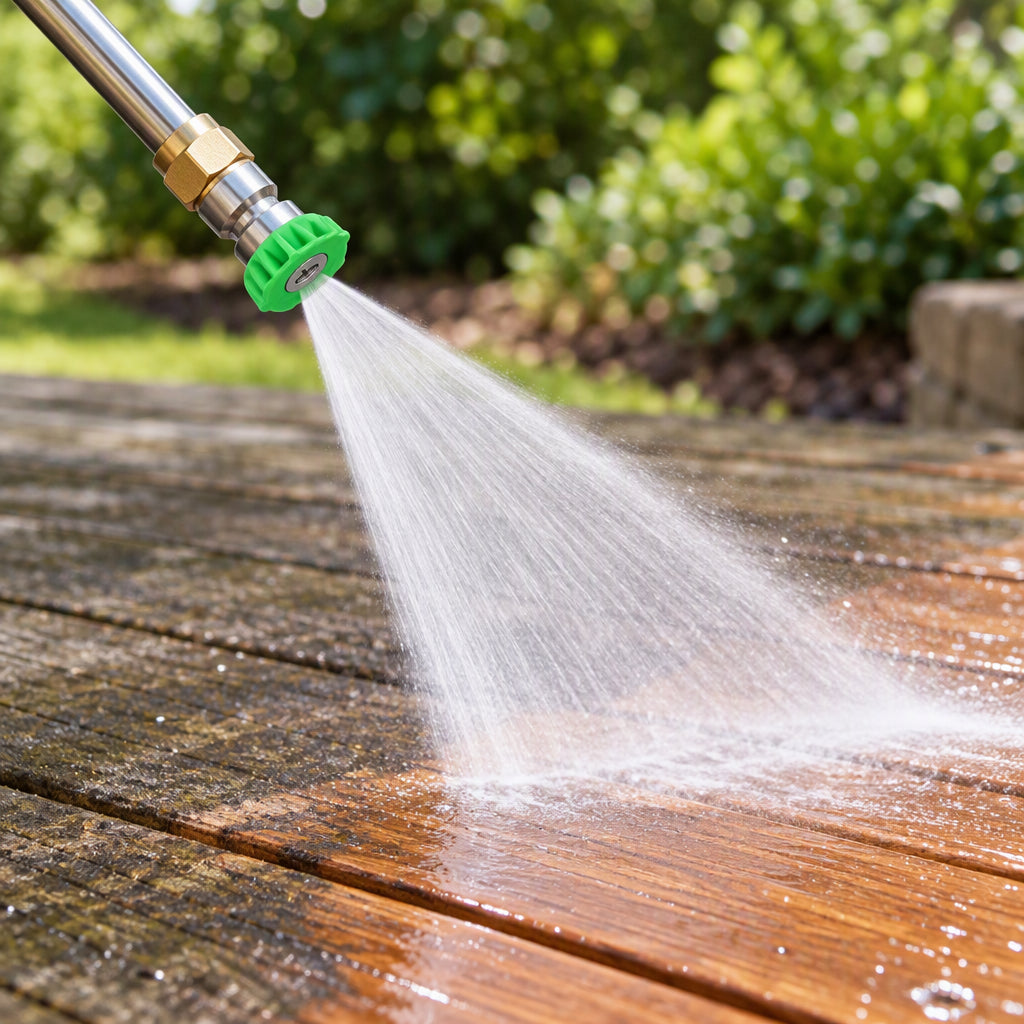
If the spray looks wider, softer or uneven than it used to with the same tip and the same machine, the tip's opening has probably worn larger. A worn tip lowers pressure at the surface even when the pump is healthy, and it is the cheapest part to test.

Four checks
- Look at the pattern on a clean surface. A 0 degree tip should leave a tight dot. A fan tip should leave an even band. Streaks or a ragged edge point to damage or debris.
- Compare with a fresh tip of the same color. Swap in a spare, same angle. If pressure at the surface clearly improves, the old tip is worn.
- Hold it up to the light. The opening should be a clean, small, round or slit shape. Chips, burrs or a rough edge mean replacement.
- Listen and feel. A worn orifice can let the pump run with less back pressure, so the trigger feels lighter and the engine or motor may sound different.
Do not mix up with a clog
A clog is a debris problem: sputtering, pulsing, or a split spray. Clean it with the pin first. If it still sprays wrong after clearing, treat it as worn. See how to clear a clogged nozzle. Do not drill or file the opening; it makes the problem worse.
What the set includes
The nozzle tip set lists red (0 degree), yellow (15), green (25) and white (40) stainless steel tips plus a brass soap nozzle, with a 1/4 inch quick connection, rated 2.5 GPM and up to 4000 PSI. The listing does not publish orifice numbers, so compare your tips side by side rather than by size. If your machine is rated differently, match the machine's GPM and PSI first.
More: what each tip color is for and orifice size and GPM explained.