
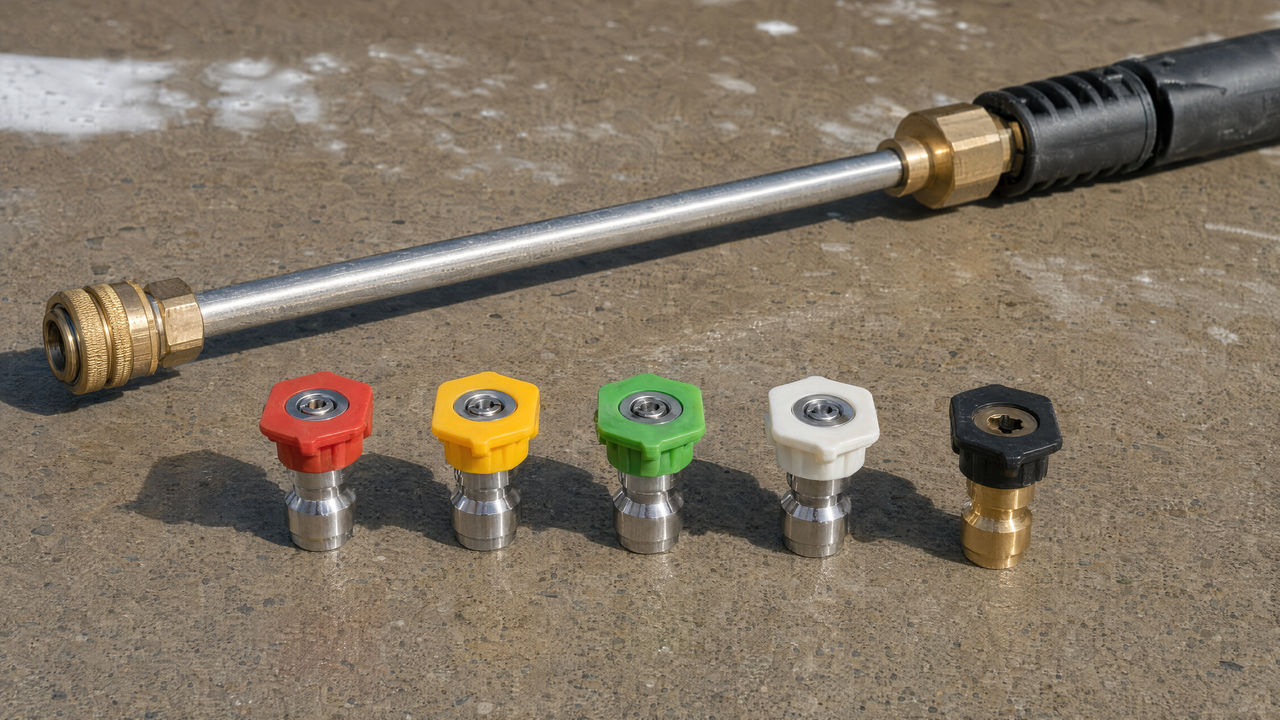
If you've ever unboxed a pressure washer and found a row of little color-coded tips, you've probably wondered whether the colors actually matter. They do — a lot. The nozzle you snap on determines the spray angle, and the spray angle decides whether you strip years of grime off your driveway or strip the paint off your fence. Using the wrong tip is the single most common way homeowners damage wood, siding, and car paint.
This guide walks through what each nozzle color means, which surfaces each one is safe for, and how to keep your tips and fittings working season after season.
Why Nozzle Colors Matter
Pressure washer nozzles are standardized by spray angle, and the industry uses a universal color code so you can tell them apart at a glance. A narrower angle concentrates the same water flow into a smaller area, which multiplies the cleaning force. A 0-degree jet can etch concrete; a 40-degree fan is gentle enough to rinse a car.
Two things to remember before we get into the colors:
- Distance is your second dial. Every extra inch between the tip and the surface softens the impact. When in doubt, start far away and move closer slowly.
- Always test first. Try an inconspicuous corner before committing to a whole deck board or siding panel.
The Five Standard Nozzle Colors
Red — 0 Degrees (Maximum Force)
The red tip fires a pencil-thin jet with no fan at all. It's the most powerful and the most dangerous nozzle in the set. Use it only for spot work on hard, unpainted surfaces: blasting caked mud off steel equipment, cleaning rust stains from concrete, or reaching a high spot from a distance. Never use red on wood, siding, vehicles, or anything you'd mind gouging — and never near people or pets.
Yellow — 15 Degrees (Heavy-Duty Stripping)
The yellow tip spreads the jet into a narrow 15-degree fan. This is your surface-prep nozzle: stripping loose paint, removing stubborn oil stains from the garage floor, or cutting through heavy grime on concrete and brick. It will still chew up soft wood, so keep it away from decks and fences.
Green — 25 Degrees (The All-Rounder)
If you only ever used one tip, it would be the green one. The 25-degree fan balances power and coverage, making it the go-to for driveways, sidewalks, patios, stone paths, and gutters. It clears dirt, mildew, and leaf stains at a comfortable pace without the gouging risk of the narrower tips.
White — 40 Degrees (Gentle Cleaning)
The white tip spreads water into a wide, soft fan. This is the safe choice for vinyl siding, windows, patio furniture, and washing your car or truck. It's also the smarter starting point for wood decks — as we covered in our deck-washing guide, softwoods like cedar and pine damage easily, so a wide fan and steady sweeping motion are essential.
Black — Soap Nozzle (Low Pressure)
The black tip has the widest opening of all, which drops the pressure low enough for your machine's detergent injector to kick in. Use it to lay down soap, let the detergent dwell for a few minutes, then switch to green or white to rinse. No soap will flow through the other tips — that's by design.
Quick Reference: Which Nozzle for Which Job
- Driveway or sidewalk: Green (25°), yellow (15°) for oil stains
- Wood deck or fence: White (40°), keep the wand moving
- Vinyl siding: White (40°) at a downward angle
- Car, truck, or RV: Black for soap, then white to rinse
- Brick and concrete stains: Yellow (15°)
- Caked equipment mud: Red (0°), sparingly
Most machines ship with some tips, but they're small and easy to lose in the grass. A complete replacement set like the Twinkle Star pressure washer nozzle tips set (1/4-inch, 2.5 GPM) includes all five colors with standard quick-connect fittings, so you're never stuck mid-job with only a red tip and a delicate surface.
Getting Nozzles to Fit: Quick-Connect Basics
Standard nozzle tips use a 1/4-inch quick-connect plug that snaps into the coupler on your wand. If your wand or hose uses M22 threaded connections instead — common on many electric models — a pressure washer adapter set with M22-to-quick-connect fittings converts everything over in a couple of minutes. Quick-connects make swapping tips between soap, clean, and rinse steps painless, which means you'll actually use the right nozzle instead of settling for whatever is already attached.
You'll find couplers, O-rings, replacement hoses, and full adapter kits in our pressure washer parts and accessories collection.
Three Habits That Make Nozzles Last
1. Replace O-rings before they leak badly
The small rubber O-ring inside each coupler compresses every time you connect a fitting. When you notice misting or dripping at a connection, swap the ring — it takes seconds and restores full pressure to the tip.
2. Clear clogged tips with water, not wire
A clogged nozzle sprays erratically and strains the pump. Shut down, remove the tip, and back-flush it with a garden hose. Avoid poking metal wire through the orifice; it can distort the spray pattern permanently.
3. Mind the water supply side, too
Your pressure washer is only as reliable as the garden hose feeding it. Leak-free brass fittings and quick connectors on the supply side protect the pump from starving. If your spigot setup needs an upgrade, our garden watering and hose fittings collection has splitters, shut-off valves, and connectors that pair well with any washer.
The Bottom Line
Match the color to the surface, start wide and step down only if the grime wins, and keep a full set of tips on hand so you're never tempted to use the wrong one. It's a small habit that saves decks, siding, and paint jobs.
Ready to gear up? Browse our full Pressure Washer Parts & Accessories collection for nozzle sets, adapters, O-rings, and hoses that fit most gas and electric machines.