
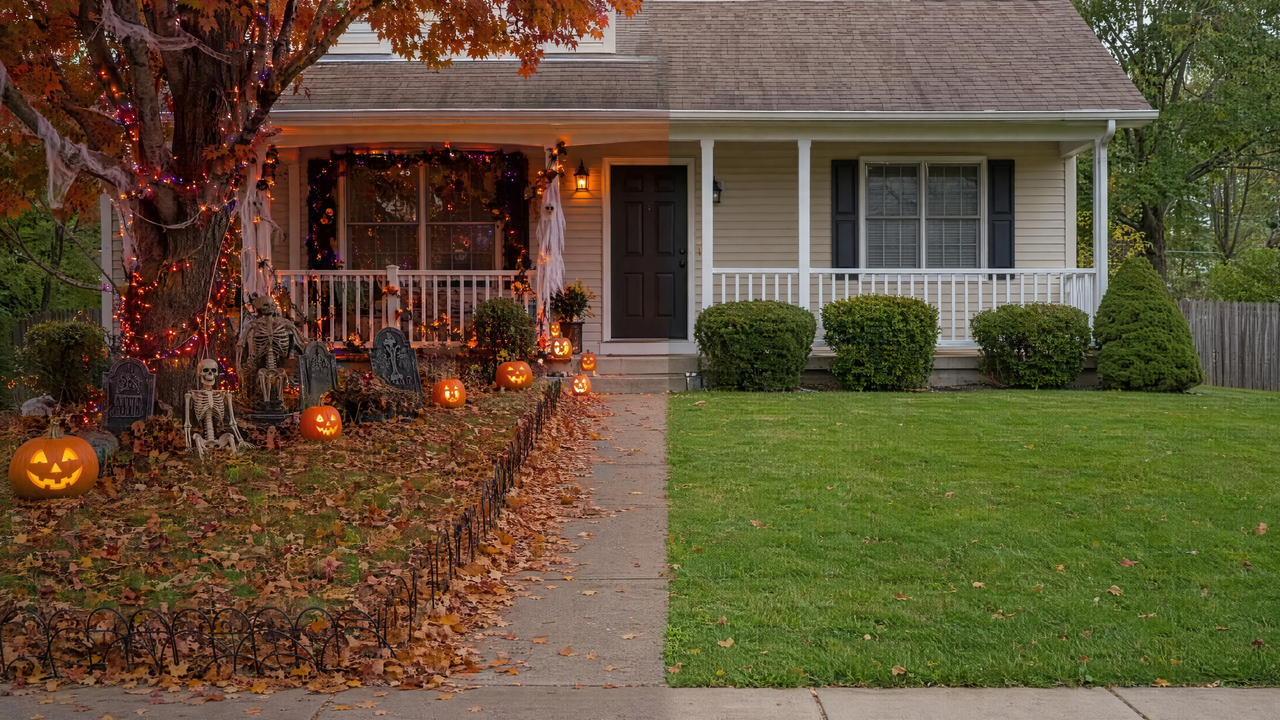
Every neighborhood has one house that goes up the first week of September and one that's still hanging cobwebs on October 30th. Most of us would rather land somewhere sensible in between - decorated long enough to enjoy it, not so early that the display looks tired by Halloween night.
Here's a practical timeline, built around what actually holds up outdoors and when the work is easiest to do.
The short answer
For most households, the last week of September through the first week of October is the sweet spot for outdoor Halloween decorating. That gives you roughly four weeks of display, which is long enough to feel worth the effort and short enough that nothing has faded, blown over, or been rained on repeatedly by the 31st.
If you go all-out with a big display, starting mid-September is reasonable - you need the extra weekends. If you're putting out a wreath and a couple of pumpkins, you can wait until mid-October and lose nothing.
Late August to early September: plan and check your gear
This is the boring part that saves the most time later. Pull last year's boxes out and actually test everything before you need it.
Plug in every light set and confirm it works. Check batteries in anything battery-powered and replace ones that have been sitting a year. Look over inflatables for seam splits, and check that stakes and tie-downs are all present. Finding a dead strand now means you can replace it calmly instead of driving around on October 5th hoping something's left in stock.
It's also the best time to buy. Selection is at its widest in late summer, and you're not competing with everyone who waited.
Mid-September: the structural work
Anything that involves a ladder, a staple gun, or running power is best done while the weather is still mild and the evenings are still light.
Put up the mounting hardware for lighting even if you don't hang the lights yet. Run and secure extension cords, and confirm your outdoor outlets and GFCIs are working. Trim back any branches that will get in the way. Doing this in warm daylight is dramatically more pleasant than doing it in a cold drizzle three weeks later.
Late September: lighting goes up
Lighting is the piece worth putting up early, because it's the piece that does the most work. Days are getting noticeably shorter, trick-or-treating happens after dark, and a well-lit yard reads as decorated even before you add a single prop.
Purple and orange are the shorthand colors of the season, and a set of 33ft purple LED fairy lights with a remote and timer wound through a porch railing or a bare shrub gives you an unmistakably Halloween glow without looking like a haunted house. The built-in timer matters more than it sounds - it means the display comes on at dusk every night without you thinking about it.
For windows, curtain-style lights create a strong silhouette effect from the street. Our 300-LED window curtain lights work for Halloween in an eerie backlit way and then carry straight through to Thanksgiving and Christmas, which makes them one of the better-value pieces in a seasonal kit. There's more in the string lights and fairy lights collection if you want to mix warm and colored strands.
Ground-level lighting deserves a thought too. Uplighting a tree trunk or lining a walkway changes the whole character of a yard after dark - see the outdoor and solar lighting range for stake and pathway options that don't need a cord run to them.
Early October: props, inflatables, and the big pieces
Now the visible stuff goes out. Inflatables, tombstones, skeletons, spider webs, door decor.
Two practical notes. First, secure everything more than you think you need to - early October storms are common, and a tumbling inflatable across a neighbor's lawn is a bad start to the season. Second, if you use fake cobwebs outdoors, stretch them thin and remove them promptly after Halloween. Dense webbing is a genuine hazard for birds and small animals.
Weatherproofing matters here as well. Keep light connectors off the ground, tuck end-to-end joins under an eave, and make sure any extension cord you're using is rated for outdoor use.
Mid-October: pumpkins and the finishing touches
Carved pumpkins last about five to ten days outdoors, less in warm weather. Carving on October 25th or later is the standard advice, and it holds up. Uncarved pumpkins and gourds will happily sit out from early October.
This is also when you add the small stuff: a wreath on the door, a doormat, a few battery tea lights in lanterns. It's the layer that makes a display feel finished, and it takes twenty minutes.
November 1: the takedown question
Halloween-specific items - skeletons, cobwebs, spiders, anything overtly spooky - come down within a few days of the 31st. It's the one piece of seasonal etiquette almost everyone agrees on.
But you don't have to strip the yard bare. Pumpkins, gourds, hay bales, and warm-white lighting all transition cleanly into a Thanksgiving look. Swap the purple strands for warm white, pull the ghosts, and you've bought yourself a month of autumn decor with about fifteen minutes of work.
When you do pack up, wind light strands around cardboard rather than bagging them loose, and pull batteries out of every battery box before storage. It's the single best predictor of whether your lights work next September.
Start with the lighting
If you only get one thing up on time, make it the lights - they carry the display from Halloween through Thanksgiving and into the winter holidays. Browse the Holiday & Seasonal Decorations collection to plan this year's setup before the good stuff sells out.