
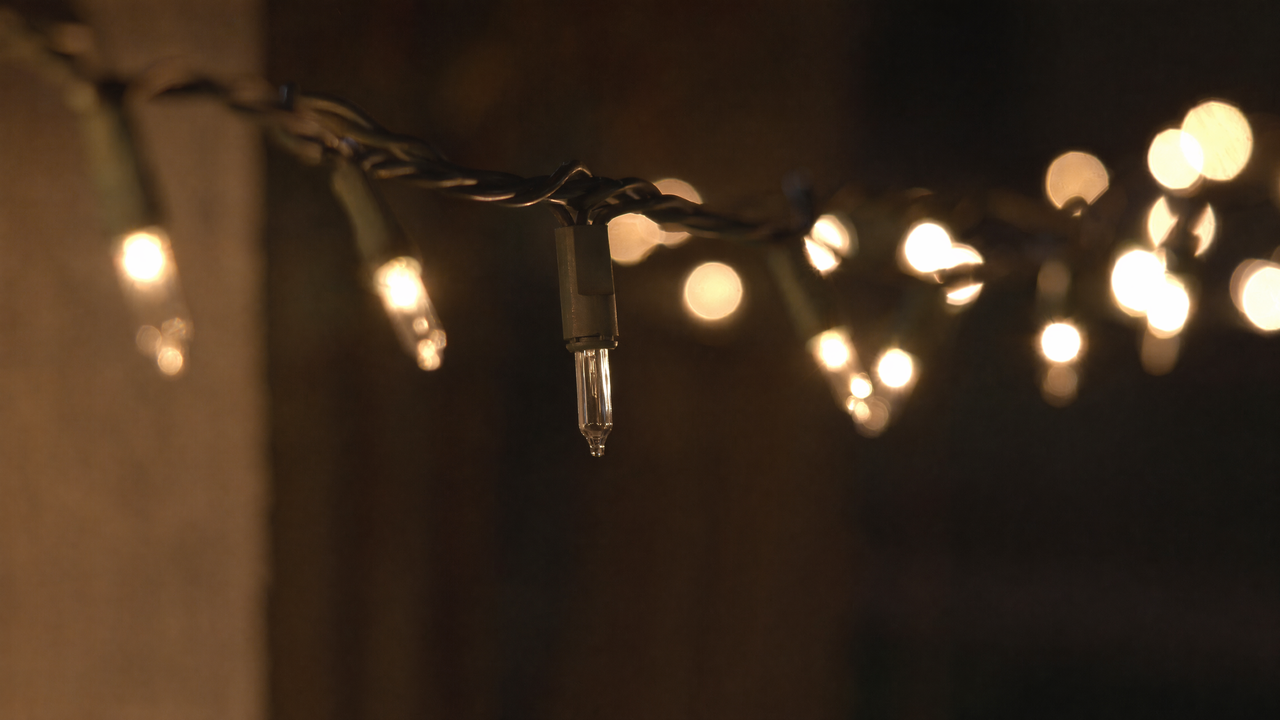
You pull last year's string lights out of the box, plug them in, and nothing happens. Or worse - half the strand lights up and the other half sits there dark, which somehow feels more personal.
The good news is that string light failures follow a short and predictable list of causes. Work through them in order and you'll usually find the culprit in under ten minutes, without any special tools.
First, narrow down what kind of failure you have
Before touching anything, note which of these three patterns you're looking at, because each points somewhere different:
- Nothing lights at all. Suspect the power source - outlet, adapter, batteries, or fuse.
- Part of the strand is dark. Suspect a single bad bulb, a loose bulb, or a break in that section's circuit.
- The lights flicker or cut out intermittently. Suspect a loose connection, a partly seated bulb, or moisture in a connector.
Knowing which bucket you're in saves you from checking fifty bulbs when the real problem is a dead adapter.
If nothing lights at all
Test the outlet, not just the lights
Plug a lamp or phone charger into the same outlet. If that doesn't work either, you've found your answer - check the breaker, and if the outlet is outdoors, check whether the GFCI has tripped. GFCI outlets trip readily after rain, and the reset button is easy to overlook.
Check the plug's fuses
Most plug-in incandescent and many LED sets have one or two tiny glass fuses hidden inside the plug body. Slide open the little door on the plug (a small flathead screwdriver helps) and look at the fuses. A blown fuse shows a broken filament or a dark smoky patch inside the glass. Replacement fuses are usually taped into the original packaging, and any hardware store carries the standard sizes.
For battery sets, check polarity and contacts
Battery-operated fairy lights fail for boring reasons. Batteries installed backwards, batteries that have quietly drained over a year in storage, or corroded contacts in the battery box. Pop the box open, look for green or white crust on the terminals, clean it off with a cotton swab and a little vinegar, dry thoroughly, and try a fresh set of batteries.
If your set has a remote, also confirm the remote's own coin cell isn't the problem. It's a genuinely common one - the lights are fine, but nothing can tell them to turn on.
Check the adapter and the timer
Plug-in low-voltage sets use a transformer block that can fail on its own. If the adapter feels stone cold and the lights are dead, that's a hint. And if the set has a built-in timer or 8-mode controller, cycle through the modes - some controllers wake up in a mode with a very long off-interval and look broken when they're only waiting.
If part of the strand is dark
Push every bulb in the dark section
On sets with replaceable bulbs, work along the unlit run and firmly seat each bulb in its socket. Vibration during storage loosens them, and a single loose bulb can break the circuit for an entire section. This one fix accounts for a large share of half-dark strands.
Look for the obviously failed bulb
Hold the dark section up to a window. A burned-out bulb often shows a blackened base or a visibly broken filament. On older incandescent strands, one dead bulb can take out everything after it - swap it with a spare from the packet and the section usually comes back.
Modern LED copper-wire sets, like our 99ft 300-LED copper wire fairy lights, are wired so that individual LEDs don't cascade the same way - which is one practical reason they've largely replaced the old series-wired strands for indoor decorating.
Inspect the wire itself
Run the strand through your fingers and look for nicks, crimps, or spots where a staple has bitten through the insulation. Fine copper wire is easy to damage when it's stapled, wound tightly, or pinched under a window frame. A visible break in the wire is the end of the line for that strand - don't attempt a splice on anything that will live outdoors.
If the lights flicker or cut out
Flickering almost always means an intermittent connection. Check where two strands join end to end, check that any bulb in the flickering section is fully seated, and check for water inside the connectors if the set lives outside. Dry connectors thoroughly, and going forward, tuck end-to-end connections under an eave or inside a small plastic bag with the opening pointed down.
Overloading can also cause dimming and cut-outs. Manufacturers specify how many strands can be daisy-chained for a reason - typically three to five for LED sets, fewer for incandescent. Exceed it and you'll get a dim, unstable run at the far end.
Preventing the same problem next year
Most string light failures are storage injuries. Wind each strand around a piece of cardboard or a cable reel rather than stuffing it in a bag. Remove the batteries from battery boxes before packing them away, so a leaking cell doesn't destroy the contacts. Store everything somewhere dry and moderate rather than in an uninsulated attic that swings between freezing and baking.
And when a strand really has reached the end, it's worth upgrading rather than replacing like for like. Plug-in sets such as our 33ft 100-LED star string lights are end-to-end extendable and rated for outdoor use, which means fewer separate strands to fail and fewer connections to go wrong. Browse the rest of the String Lights & Fairy Lights collection for indoor fairy lights, curtain lights, and weatherproof outdoor strands, or see what's currently discounted on our sale page.
Ready to replace the strand that finally gave up? Start with the full string lights range and pick a set built for where you actually plan to hang it.