
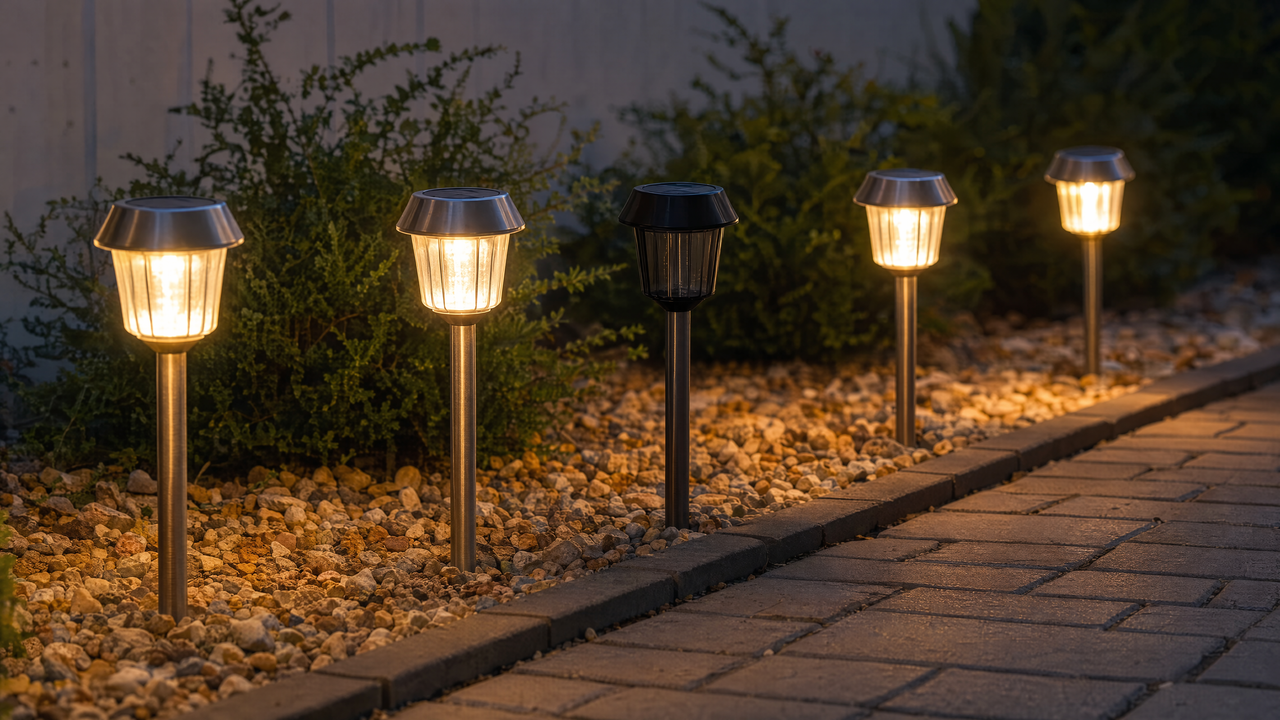
You bought solar lights because they seemed like the easy option: no wiring, no timers, no extra line on the electricity bill. Then one evening the path stays dark, or half the set glows for twenty minutes and quits. Before you write them off, it helps to know that most "broken" solar lights aren't broken at all. They're dirty, shaded, switched off, or running on a battery that has simply reached the end of its life.
Here's how to work through the problem in order, starting with the fixes that take ten seconds.
Start with the quick checks
1. The pull tab and the power switch
This sounds too obvious to mention, and it is still the single most common reason a brand-new solar light does nothing. Most units ship with a thin plastic tab wedged between the battery and the contact so the battery doesn't drain in a warehouse. If that tab is still in place, the light will never charge.
Many models also have a small ON/OFF switch tucked under the lid or behind a rubber flap on the underside of the solar panel. Shipping and handling flip these more often than you'd think. Find the switch, make sure it's on, and give the light a full sunny day before judging it.
2. A dirty or hazy solar panel
The panel is the whole engine. A film of pollen, dust, hard-water spots, or bird droppings can cut charging efficiency dramatically, and it builds up so gradually that you never notice the lights getting dimmer week by week.
Wipe the panel with a soft cloth and warm soapy water, then rinse and dry it. For panels that have gone cloudy and yellow from years of UV exposure, a little plastic polish or automotive headlight restorer can bring back a surprising amount of clarity. Make this a twice-a-year habit, in spring and again in early fall, and you'll avoid the slow fade entirely.
3. Not enough direct sun
Solar lights need direct sunlight, not ambient daylight. Six to eight hours is the usual target for a full charge, and shade that wasn't there in April may well be there in August once the trees fill out.
Watch where the shadows fall across your yard at midday. A light tucked against the north side of a fence, under a low branch, or behind a shrub that's grown a foot since spring will never fully charge no matter how healthy the battery is. Moving it three feet often solves the problem outright.
When the quick checks don't fix it
4. A tired rechargeable battery
The rechargeable cells inside solar lights are consumables. Most last somewhere between one and three years before they stop holding a useful charge. The classic symptom: the light comes on at dusk, runs bright for fifteen or twenty minutes, then fades to nothing.
Open the battery compartment and check what's inside. Most take a standard AA or AAA NiMH cell, which costs a few dollars to replace and takes a minute to swap. Match the chemistry and capacity to what came out, and don't substitute a regular alkaline battery - alkalines aren't designed to be recharged and can leak inside the housing.
5. Corroded contacts
While the compartment is open, look at the metal contacts. Green or white crust means moisture has found its way in. Scrub it off with a cotton swab and a little white vinegar, dry it thoroughly, and check that the gasket or O-ring around the lid is still soft and seated properly. A perished seal will let water back in within weeks.
6. The light sensor is being fooled
Solar lights turn on when their photoresistor sees darkness. Position one near a porch light, a streetlamp, or a window that glows all evening and the sensor may never trip. Test it by covering the panel with your hand or a dark cloth during the day - if the LED lights up, the sensor and battery are both fine and you simply have a placement problem.
7. Cold weather and shorter days
Battery capacity drops in the cold, and there's less daylight to work with. Runtimes that felt generous in July naturally shrink in November. That's physics rather than a fault, though clean panels and fresh batteries make a real difference at the margins.
8. The fixture has genuinely reached the end
If you've replaced the battery, cleaned the panel, moved the light into full sun, and it still won't hold a charge, the panel or the internal circuit has likely failed. At that point replacement is the sensible call - and it's worth choosing a fixture with a replaceable battery and a sealed housing so the next one lasts longer.
Buying lights that last longer
Not all solar fixtures age at the same rate. When you're shopping our outdoor and solar lighting collection, look for a few specific things: a replaceable standard-size battery rather than a sealed pack, a panel large enough to actually charge the LED it powers, and an IP-rated housing with a proper gasket.
Fixture style matters too. Our 34-inch hanging solar lanterns with shepherd hooks put the panel up above ground level, which keeps it clear of splashing mud and low shade - a meaningful advantage over lights that sit right in the flowerbed. For walkways and driveways, a set like our 12-pack solar pathway lights lets you space fixtures generously and reposition the ones that end up in shade.
If a corner of your yard simply doesn't get enough sun to support solar, that's not a dead end. Plug-in or battery-powered options from our string lights and fairy lights range will happily light a shaded pergola or side path where solar never could.
A simple maintenance rhythm
Twice a year, wipe the panels and check the seals. Once every couple of years, swap the batteries. Each autumn, take thirty seconds to notice whether summer growth has thrown new shade across anything. That's genuinely the whole routine, and it's the difference between lights that last two seasons and lights that last six.
Ready to refresh the ones that are past saving? Browse the full Outdoor & Solar Lights collection for pathway sets, hanging lanterns, and landscape fixtures built to handle a few more winters.