
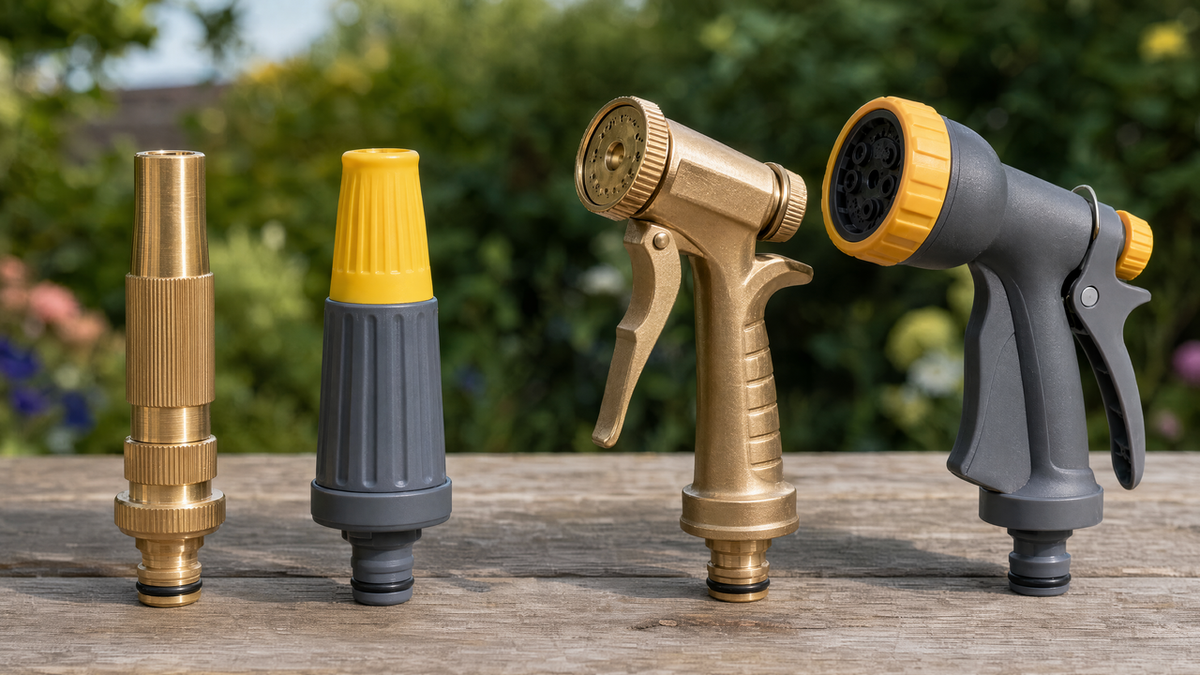
Why Your Garden Hose Nozzle Matters More Than You Think
It's easy to treat a hose nozzle as an afterthought — grab whatever's cheapest at the hardware store and move on. But the nozzle is the one part of your watering setup you touch every single time you use a hose, and a bad one makes every job harder. A nozzle that leaks at the connector wastes water and lowers pressure. One with only a single spray setting forces you to use a full-blast jet to rinse a delicate seedling or a weak trickle to blast dirt off a patio. The right nozzle, on the other hand, adjusts to the job in front of you and keeps working season after season without cracking, dripping, or seizing up.
If you're shopping for a replacement or upgrading your setup, here's what actually matters, plus a few picks worth considering from our garden watering and hose fittings lineup.
Types of Garden Hose Nozzles Explained
Twist Nozzles
A twist nozzle is the classic design: you rotate the head to move between a tight, high-pressure jet and a wide, gentle fan. They're simple, have very few moving parts to fail, and are usually the most durable option when built from solid brass. A brass twist nozzle like this adjustable jet sweeper nozzle is a good example — the four-hole tip gives you real pressure for cleaning driveways and gutters, not just a decorative mist.
Multi-Pattern Spray Guns
Pistol-grip spray guns with a trigger and a dial of 6-9 patterns (shower, cone, flat, jet, and so on) are the most versatile choice if you do a mix of watering, washing, and rinsing throughout the week. The trade-off is more internal parts, which means more that can eventually wear out — so look for metal internals rather than all-plastic construction if you want one to last more than a season or two.
Nozzles With a Built-In Shut-Off Valve
A shut-off valve at the nozzle lets you stop the water flow at your hand instead of walking back to the spigot every time you pause. This is genuinely useful if you're moving between garden beds, filling multiple containers, or working with kids or pets nearby who might bump the hose. Options like a brass twist nozzle with an on/off valve combine both features in one solid-brass fitting, which is handy if you maintain hoses at more than one spigot.
What to Look For When Buying a Hose Nozzle
Material: Brass vs. Plastic
Plastic nozzles are lightweight and inexpensive, but the threads and internal seals are usually the first thing to fail, especially if the nozzle sits outside through a full summer of UV exposure and temperature swings. Solid brass costs a little more up front but resists cracking, doesn't corrode, and keeps its threads true so it won't cross-thread onto your hose or a splitter. If you're buying once and want to stop replacing nozzles every year, brass is worth the difference in price.
Spray Patterns You Actually Need
More settings aren't always better — they're only useful if you'll use them. For most home gardens, three patterns cover almost everything: a fine mist for seedlings and hanging baskets, a shower or fan for general bed watering, and a concentrated jet for rinsing tools, pots, or hard surfaces. If you also wash your car or clean the patio, a dedicated jet setting with real pressure behind it matters more than having a dozen decorative options you'll never touch.
Thread Compatibility and Connector Fit
Standard garden hoses in the US use 3/4" GHT (garden hose thread) fittings, and most nozzles are built to match. Still, it's worth double-checking the thread size if you're connecting through a splitter, an inline filter, or a quick-connect adapter, since a mismatched fitting is one of the most common causes of leaks at the connection point. If you're rebuilding your whole watering setup, it's worth browsing a full garden watering and hose fittings collection at once so the nozzle, connectors, and splitters you choose are all compatible from the start.
Matching the Nozzle to the Job
Watering Containers, Beds, and Hanging Baskets
Look for a nozzle with a true shower or fine-mist setting — a hard jet at close range can knock soil out of pots or damage young plants. A twist nozzle with a wide fan pattern is usually all you need here, and keeping the flow gentle also means less water bouncing off leaves and wasted down the driveway.
Rinsing Cars, Siding, and Patios
For anything with dirt caked on — a car, deck furniture, or a concrete walkway — you want a nozzle that can deliver a concentrated jet without needing a pressure washer. A solid brass nozzle with a tight multi-hole tip gives you noticeably more cleaning power than a plastic dial nozzle at the same water pressure.
Filling Buckets and Cleaning Tools
A shut-off valve at the nozzle is the most useful feature here, since you're constantly starting and stopping flow. It also means less time standing at the spigot turning the water on and off, and less wear on the spigot valve itself from repeated use.
Quick Buying Checklist
Before you check out, run through this short list: solid brass construction over plastic if you want it to last, at least three spray patterns that match what you'll actually use, a built-in shut-off valve if you're filling containers or working solo, and a standard 3/4" GHT thread that matches the rest of your hose and connectors. Getting these four things right will save you from buying a replacement nozzle again next season.
Ready to upgrade? Shop our full range of garden watering and hose fittings to find a nozzle, connector, or splitter that fits your setup.