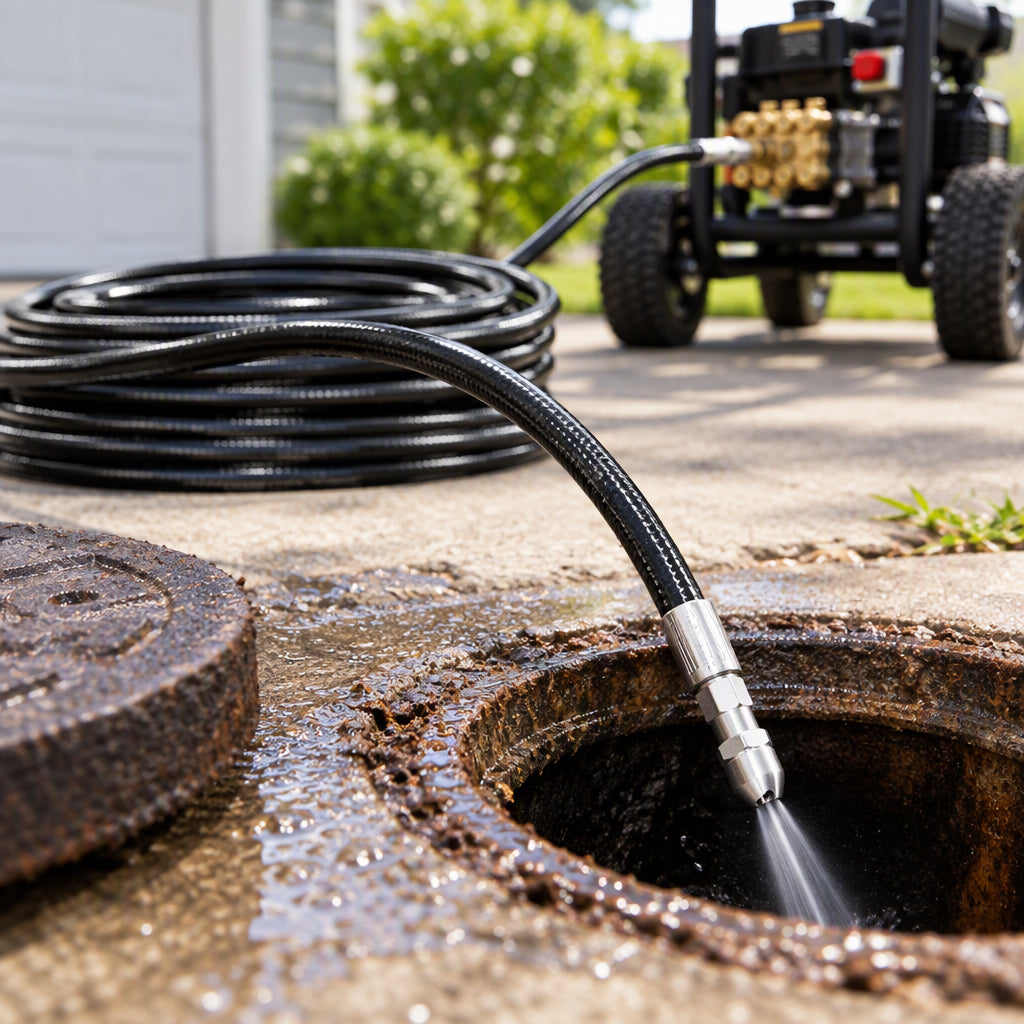
A pressure washer sewer jetter works best on ordinary household drain lines such as PVC, ABS and cast iron, and it needs extra care on old, cracked or damaged pipes, where water pressure can worsen the problem. If you are unsure of the pipe's condition, stop and have it inspected.
What the jetter kit does
A sewer jetter attaches to a pressure washer and sends water through a small, flexible hose to blast a blockage. The Twinkle Star sewer jetter kit includes a 50 ft hose, three button-nose nozzles with orifice sizes 4.0, 4.5 and 5.5, a rotating nozzle, an M22-14 brass fitting, thread seal tape and a 1/4-inch quick connector. The button-nose design has one front jet at 0 degrees to break the clog and three rear jets at 33 degrees that push the hose forward and flush debris back.
Pipe types and what to know
| Pipe | General suitability | Notes |
|---|---|---|
| PVC / ABS | Common and usually suitable | Keep the hose moving; don't dwell on one spot |
| Cast iron | Usually suitable | Heavy scale can break loose in chunks; expect debris |
| Clay | Use caution | Older joints may be loose or root-damaged |
| Galvanized steel | Use caution | Corroded walls may be thin |
| Cracked, collapsed or offset pipe | Not advised | A jetter will not fix structural damage |
This table is general guidance, not an engineering assessment. We have not tested the kit on each pipe material, so check pipe condition and local rules first.
Warning signs to stop
- The hose stops at the same spot repeatedly even after clearing; this may indicate a collapsed or offset pipe.
- Water backs up with each pass or leaks into the ground nearby.
- You see roots or broken pieces of pipe returning on the hose.
- The line connects to a septic system you have not inspected.
Safe setup
- Choose the access point, such as a cleanout, floor drain or outdoor access, and clear it.
- Attach the nozzle and wrap thread seal tape where the kit instructs.
- Connect the hose to the pressure washer with the correct fittings. If you need a refresher on fittings, see M22 vs 3/8 quick connect.
- Feed the hose into the pipe by hand before starting the water, and keep the hose controlled so it can't whip back out.
- Start the water, advance slowly, and pull back periodically to let debris wash out.
- Wear eye protection and waterproof gloves.
Which nozzle first?
Try the smallest orifice you have used successfully, then step up if flow is too low. Different orifice sizes change flow and pressure; check the reference table on the nozzle listing. For a general overview of drain jetting, see our pressure washer sewer jetter drain cleaning guide.