
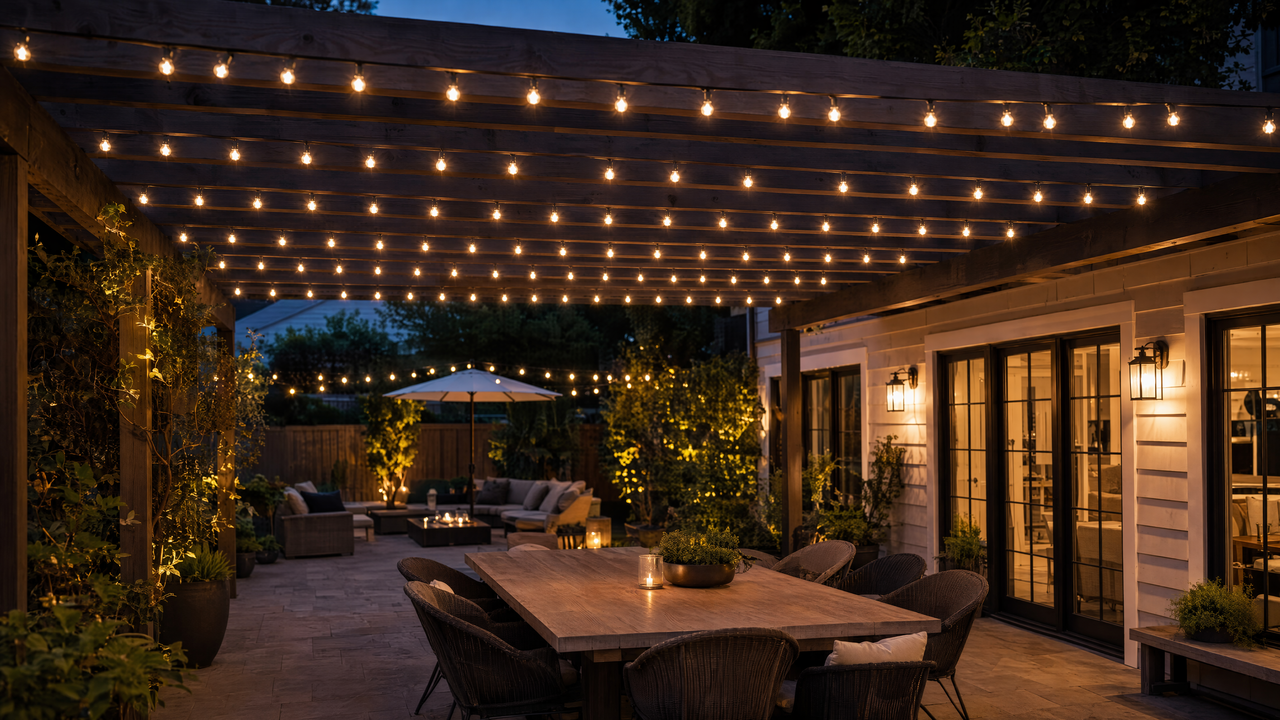
String lights are the fastest way to turn a plain patio into somewhere you actually want to spend the evening. But there's a visible difference between lights that were hung with a plan and lights that were flung over a fence and hoped for the best. The good news: doing it right doesn't take special skills — just the right anchors, a little geometry, and ten extra minutes of prep. Here's the full playbook, including options that don't leave a single hole in your wall.
Step 1: Plan the Layout Before You Touch a Ladder
Grab a tape measure and sketch your space. The three classic patterns:
- Perimeter: lights follow the edges of the space — clean, architectural, and the easiest to install along a fence line or roofline.
- Canopy (X or V pattern): strands criss-cross overhead from corner to corner. This is the "café patio" look, and it needs a center high point or careful tensioning.
- Draped rows: parallel strands running the width of the space, ideal over dining tables and pergolas.
Measure the actual run — including the drop from the outlet and every swag — then add 10–15%. A "20-foot patio" almost always needs more than 20 feet of lights once sag and corners are counted.
Step 2: Let There Be Sag (About 6 Inches of It)
Pulled drum-tight, string lights look institutional and — worse — they snap in wind because there's no give. Aim for a gentle 4–6 inch swag between anchor points, with anchors every 6–8 feet. The relaxed curve reads as intentional and absorbs gusts instead of fighting them.
Step 3: Pick Your Anchors — With or Without Drilling
If you can drill (wood posts, pergolas, fences)
Stainless cup hooks or screw-in eye hooks are the gold standard: one small pilot hole each, and they'll outlast the lights. For runs over 15 feet or heavier bulb strands, run a galvanized guide wire between eye bolts first and clip the lights to the wire — the wire carries the weight, so the light string never stretches.
If you can't drill (rentals, stucco, brick, vinyl siding)
- Adhesive hooks rated for outdoors: clean the surface with rubbing alcohol first, press for 30 seconds, and wait an hour before loading. Use one hook per 3–4 feet for lightweight strands.
- Gutter hooks: S-shaped clips that snap over the lip of a gutter — zero damage, five-second install, perfect for rooflines.
- Freestanding poles: plant a wooden or metal pole in a concrete-filled planter and you've got an anchor point anywhere on a patio — the standard trick for yards with nothing overhead to attach to.
- Trees and existing structures: loop around branches with soft ties rather than nailing into the trunk.
Step 4: Power — Think It Through Before Hanging
Start at the outlet and work away from it; ending a beautiful run six feet short of power is the most common rookie mistake. Use an outdoor-rated extension cord if needed, keep connections off the ground, and check the string's rating for how many sets can be daisy-chained end to end. No outdoor outlet at all? Battery packs and solar panels solve it — we compared all three power options in detail in our battery vs. plug-in vs. solar string lights guide, and you'll find solar-powered options in the outdoor and solar lights collection.
Step 5: Hang, Step Back, Adjust
Hang the full run loosely first, then walk to the far side of the yard and look. Adjust swag depth so every scallop matches, make sure the lowest point clears heads (7 feet minimum over walkways), and only then secure everything tight. Turn them on before you put the ladder away — finding a dead section at dusk with the ladder in the garage is a special kind of frustrating.
Which Lights Where?
For open-air patios and fence lines, a waterproof plug-in strand with decorative shape reads beautifully at night — the 100 LED star string lights (33ft, warm white) add a subtle festive shape you don't get from plain bulbs, and the eight modes let you go from steady glow for dinner to twinkle for parties. For vertical surfaces — a porch wall, a fence panel behind the seating area, or the inside of a pergola — a 300 LED curtain string light creates a glowing backdrop in one piece instead of five zigzagging strands; we covered layout ideas for those in our curtain lights guide.
Whichever style fits your space, check the full string lights and fairy lights collection for plug-in, battery, and remote-controlled options in multiple lengths.
Keeping Them Up All Season
- After the first week, re-tension once — new strands settle.
- Unplug before storms with high wind warnings; a sagging wire survives weather, a whipping one doesn't.
- Check adhesive hooks monthly in summer heat; hot stucco loosens adhesive faster than you'd think.
- When winter comes, coil strands around a piece of cardboard instead of stuffing them in a box — future you will be grateful.
An afternoon of careful hanging buys you months of effortless evening ambience — and none of the drooping, drooling-wire look that plagues hasty installs.
Ready to light up the patio? Browse the full String Lights & Fairy Lights collection for waterproof strands, curtain lights, and remote-controlled sets in every length.