
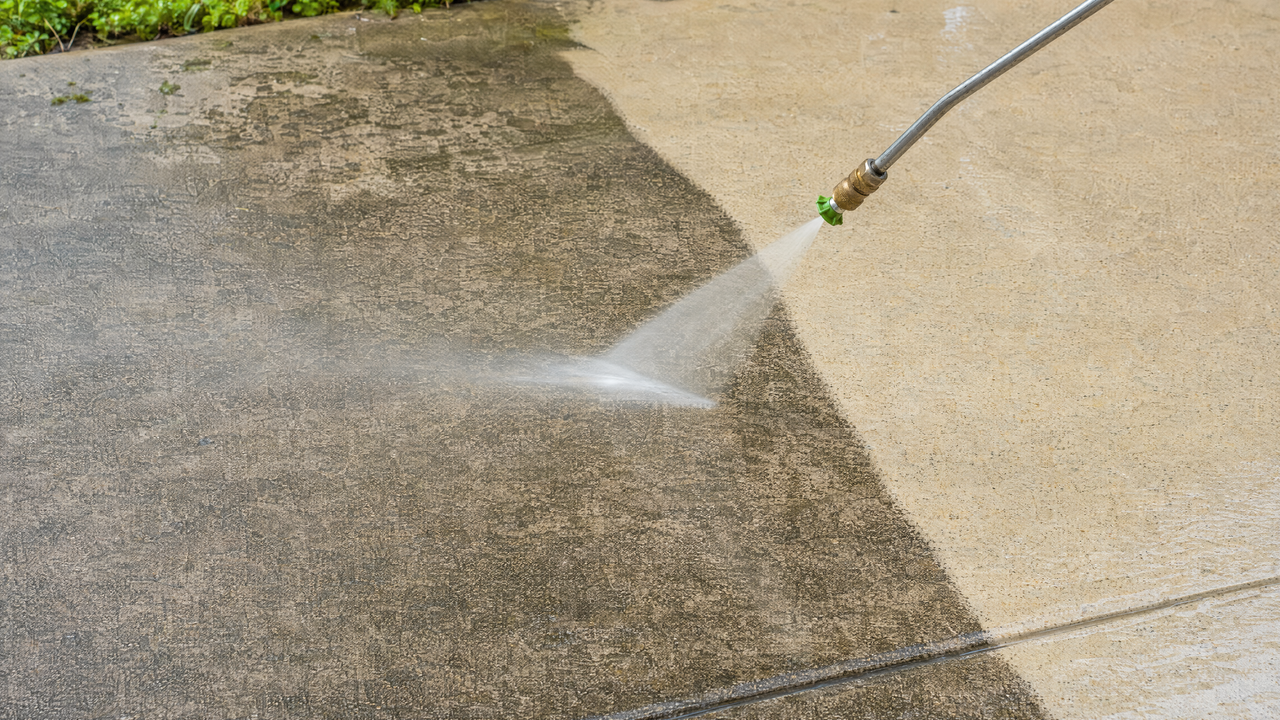
Nothing ages a house from the curb like a driveway coated in years of tire marks, oil drips, mildew shadows, and general gray grime. The transformation from a single afternoon of pressure washing is dramatic — it's the closest thing home maintenance has to instant gratification. But concrete is more forgiving than wood, not indestructible, and there's a right order of operations. Here's the full process.
What You'll Need
- A pressure washer — gas or electric, ideally 2,500–3,000 PSI for concrete (electric units around 2,000 PSI work, just slower)
- A 25-degree (green) nozzle for general cleaning and a 15-degree (yellow) tip for stubborn stains
- A soap nozzle (black) and concrete detergent or degreaser
- A stiff push broom, garden hose, and safety glasses
If your machine's tips have gone missing — they always do — a full five-piece pressure washer nozzle tip set restores every spray angle for less than the cost of lunch. We broke down what each color does in our nozzle colors guide if you need a refresher.
Step 1: Clear and Sweep
Move cars, bikes, planters, and hoses off the surface. Sweep away loose grit and leaves — pressure washing over gravel turns it into shrapnel that can chip paint and glass. Cover or wet down nearby plants; detergent overspray is hard on greenery. Close the garage door: the fine mist travels farther than you think.
Step 2: Pre-Treat the Ugly Spots
Oil and grease laugh at plain water. Squirt degreaser or dish soap directly onto oil stains, scrub with a stiff brush, and let it sit 10–15 minutes while you set up. Rust stains from furniture or fertilizer need a dedicated rust remover — pressure alone will lighten but not erase them. Mildew and algae in shaded corners respond well to a driveway detergent with a mildewcide.
Step 3: Apply Detergent to the Whole Surface
Snap on the black soap nozzle and coat the driveway in sections, working from the highest point downhill. Let the detergent dwell 5–10 minutes — it's doing chemical work you won't have to do with pressure — but don't let it dry. On a hot August afternoon, work in smaller sections or start early in the morning.
Step 4: Wash with the Green Tip, Sweep Like You Mow
Switch to the 25-degree nozzle and hold the wand 8–12 inches off the surface at a slight angle. Clean in long, overlapping strokes — the same pattern you'd use mowing a lawn — overlapping each pass by a few inches so you don't leave "zebra stripes" of cleaned and missed lanes. Work downhill so dirty water drains away from finished areas. For ground-in grime or the pre-treated oil spots, swap to the 15-degree tip and drop closer, but keep the wand moving — hovering in one spot at close range can etch a permanent bright patch in the concrete.
Step 5: Rinse and Inspect
Go back over everything with the 25-degree tip in clean-water mode (or a garden hose) to flush detergent residue toward the drain. Now inspect while it's wet: spots that still look dark when everything else is clean need a second pass — wet concrete hides less than dry.
Step 6 (Optional but Smart): Seal It
Once the slab has dried for 24–48 hours, a concrete sealer is the difference between doing this again next summer or three summers from now. Sealed concrete sheds oil, resists staining, and rinses clean with just a hose. Roll it on like paint, thin coats, and keep cars off for the cure time on the label.
Fittings Check: The Five-Minute Pre-Flight
Half of all frustrating pressure-washer sessions come down to connections, not the machine. Before you start:
- O-rings: a worn ring at the wand or hose coupling sprays a fine mist sideways and bleeds pressure. Keep spares on hand and swap at the first drip.
- Quick-connects: if your machine still uses slow threaded M22 connections, an M22-to-quick-connect adapter set makes tip and hose changes a two-second snap — which means you'll actually switch to the right nozzle for each zone instead of muscling through with one.
- Water supply: check the garden hose feeding the machine for kinks and a tight, washer-sealed spigot connection; a starved pump is an unhappy pump. Replacement washers, couplers, and valves are in our garden watering and hose fittings collection.
How Often Should You Do This?
Once a year keeps most driveways presentable — late summer or early fall is ideal, clearing summer's oil and grime before wet leaves and winter salt arrive. High-traffic driveways under trees may want a spring rinse too. Pair it with the deck — our deck pressure-washing guide covers the gentler technique wood demands — and the whole approach to your house looks five years younger in a weekend.
Stock up before you start: nozzle sets, adapters, O-rings, and replacement hoses are all in the Pressure Washer Parts & Accessories collection.