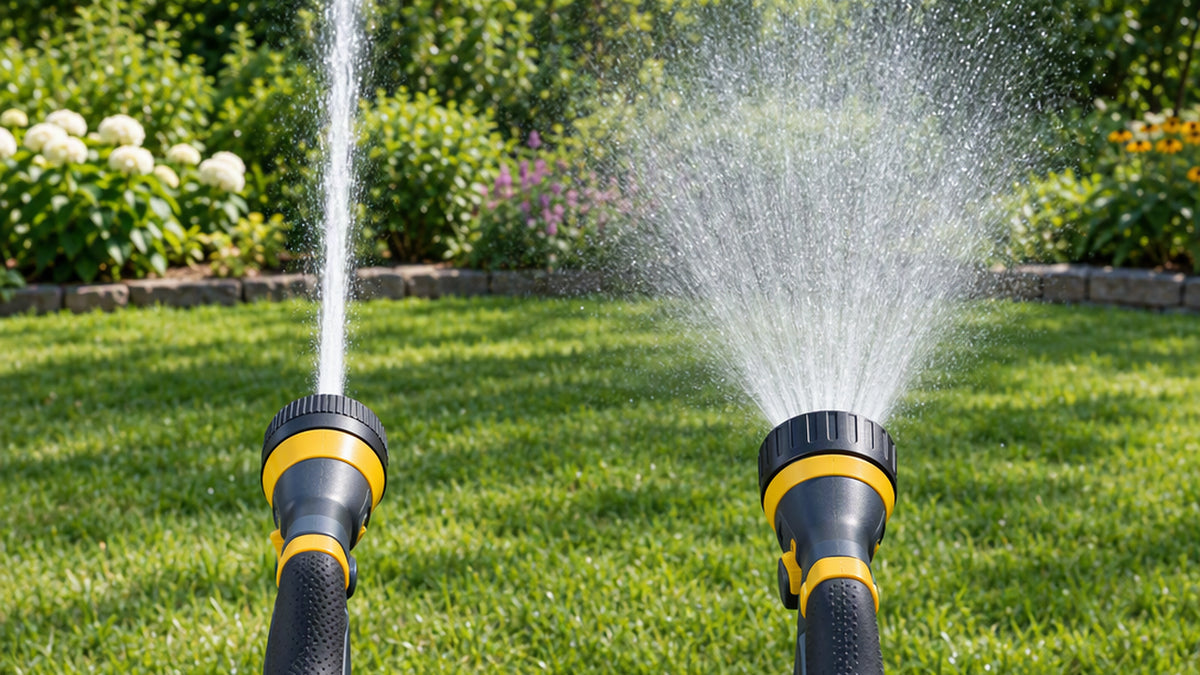
A hose nozzle looks like a minor accessory, but it controls how much water you use, how gently you can water a seedling and how well you can blast mud off a patio. Choose the wrong one and you will fight your hose every time you use it. Here is a straightforward look at the main nozzle types, what each is good for and how to choose one that lasts.
Why the nozzle matters
The nozzle is the last point of control on your watering setup. A good one lets you shift from a soft shower to a strong jet without changing tools, shut off the flow while you move, and handle outdoor use for seasons rather than months. A poor one leaks, sticks or cracks after one winter.
The main types of hose nozzles
Twist nozzles
Twist (or adjustable) nozzles let you rotate the head to change the spray from a wide, gentle shower to a narrow, powerful stream. They are simple, have few moving parts and are easy to use with one hand. Because there are no trigger springs to wear out, many people find them reliable for years of general use.
The heavy-duty brass adjustable twist hose nozzle 2-pack is a good example. It has solid brass construction and four holes at the tip for water flow, and the adjustable jet rotates from a light stream to a more powerful one. A 2-pack means you can keep one at the front of the house and one in the back garden.
Trigger nozzles
These use a squeeze handle to start and stop the flow. They are comfortable for long watering sessions because you can pause instantly. The trade-off is that holding the trigger can tire your hand, and plastic ones sometimes crack or leak with age. Many have a lock to hold the trigger open.
Pistol-grip and multi-pattern nozzles
Multi-pattern nozzles offer settings such as mist, shower, flat and jet on a rotating dial. They are great for people who tackle many different jobs, from watering delicate plants to cleaning outdoor furniture. More settings mean more parts, so quality really matters here.
Fan and shower nozzles
Fan nozzles spread water in a wide, gentle arc, which is ideal for flower beds and seedlings. They soak the soil without blasting leaves or washing out roots.
Jet and sweeper nozzles
A jet nozzle focuses water into a strong stream for rinsing driveways, decks, siding and tools. A sweeper nozzle is similar and good for pushing leaves and dirt off hard surfaces. These are the best option when you want cleaning power, and they are not meant for delicate plants.
Material matters: brass versus plastic
Plastic nozzles are light and cheap, but they can crack in cold weather, warp in heat and wear out at the threads. Metal nozzles, especially solid brass, hold up better against daily use, drops and temperature swings. Brass also does not rust. If you plan to keep your nozzle for years, it is usually worth paying a little more for brass.
Look for O-ring seals at the connection points. Our solid brass adjustable twist jet sweeper nozzle uses O-ring seals at the back and front, which helps stop leaks where the nozzle meets the hose.
Nozzles with a shut-off valve
A built-in shut-off valve is one of the most practical features you can have. You can turn the water off at the nozzle while you move around the yard, change a sprinkler or stop to answer the door, without running back to the spigot. For anyone watering a larger garden, it saves time and wasted water.
The brass twist hose nozzle with shut-off valve in a 4-pack is a handy set for households with several hoses or for sharing with family and neighbors.
How to choose: match the nozzle to the job
- Everyday garden watering: a twist nozzle with a gentle shower setting.
- Delicate seedlings and new beds: a fan or shower pattern at low flow.
- Washing cars, bikes and outdoor furniture: a multi-pattern or twist nozzle with a medium spray.
- Cleaning patios and driveways: a jet or sweeper nozzle.
- Large gardens with frequent stops: any style that includes a shut-off valve.
Check the connection size
In the United States, most garden hoses use 3/4-inch GHT (garden hose thread) fittings. Before you buy a nozzle, check that it uses the same thread size. Most do, but specialty hoses and adapters occasionally differ. If you are mixing parts, the right fittings and washers make all the difference.
Install and maintain your nozzle
- Check that the rubber washer inside the hose end is intact. A missing or cracked washer is the most common cause of leaks.
- Thread the nozzle on by hand and tighten snugly. Over-tightening can damage the washer or threads.
- After use, shut off the water at the spigot, then open the nozzle to release pressure.
- Before freezing weather, remove the nozzle, drain it and store it indoors. Our guide to winterizing your garden hose walks through the full process.
Signs it is time to replace your nozzle
- It drips when closed or leaks at the thread.
- The spray is uneven or weak, even with clean holes.
- The adjustment ring is stiff or stuck.
- You can see cracks or corrosion.
If your nozzle only leaks at the connection, try a fresh washer first, as described in our post on fixing a leaking hose connection.
Complete your watering setup
A good nozzle works best with the right connectors, valves and splitters around it. Our garden watering and hose fittings collection brings together nozzles, quick connectors and other parts so you can build a setup that fits your yard. For the cleaning side of outdoor chores, see our pressure washer parts and accessories.
Ready to upgrade your hose end? Explore the Garden Watering & Hose Fittings collection and pick a nozzle that suits your garden.