
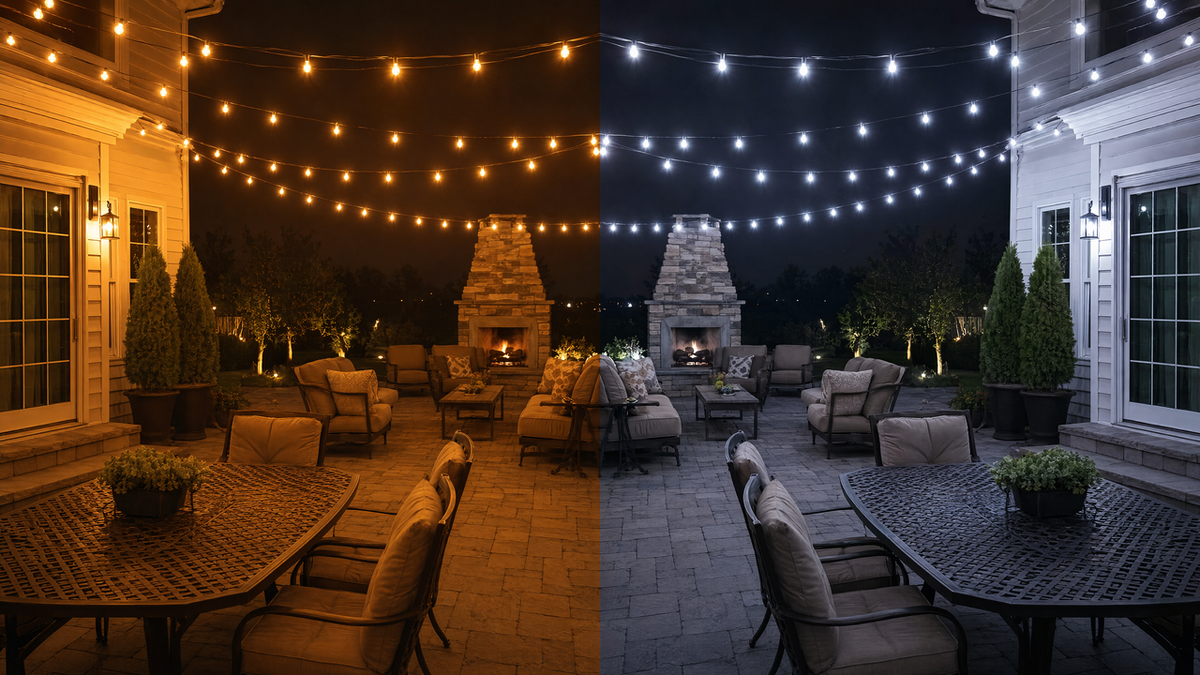
Two strands of string lights can have the same LED count, the same length, and the same price, and still look completely different once they're lit. The difference is color temperature. Warm white glows like candlelight; cool white reads as crisp and icy. Picking the wrong one is the most common reason people say their lights "look off" in photos or feel harsh on the patio. Here's how to choose, room by room and season by season.
What color temperature actually means
Color temperature is measured in Kelvin (K). Lower numbers are warmer and more orange; higher numbers are cooler and more blue.
- 2200K to 2700K: warm white. Amber, candlelight, the glow of an old incandescent bulb. Most "warm white" string lights sit here.
- 3000K to 3500K: soft white. Still warm, slightly cleaner. Common in halogen-look bulbs.
- 4000K to 4500K: cool white. Neutral to slightly blue. Reads as bright and modern.
- 5000K to 6500K: daylight. Distinctly blue-white. Very bright, often described as "icy."
Many string lights don't list a Kelvin number and just say warm white or cool white. As a rule, warm white means somewhere around 2700K and cool white means 5000K or higher.
Warm white: where it works
Warm white is the safer default for almost every residential setting. It flatters skin tones, makes wood and brick look richer, and doesn't compete with sunset light on a patio.
Choose warm white for patios, pergolas, and backyard dining; bedrooms and living rooms; weddings, restaurants, and any event where people will be photographed; fall and Thanksgiving decor; and traditional Christmas displays. If you're unsure, a 99ft warm white copper wire fairy light is the kind of set that looks right in nearly any room.
Cool white: where it works
Cool white has a specific job: it looks like ice, snow, and starlight. It's dramatic against dark backgrounds and it pops in daylight photos in a way warm white doesn't.
Choose cool white for winter wonderland and icicle displays; modern, minimalist exteriors with white or gray siding; Halloween backdrops where you want a stark, eerie glow; commercial or storefront windows; and anywhere you want the lights to be the brightest thing in the scene. A white star string light hung in a window is a good example of cool white doing what it does best: reading as crisp shapes from the street.
Room-by-room and season-by-season cheat sheet
| Setting | Best choice | Why |
|---|---|---|
| Bedroom | Warm white | Relaxing, doesn't interfere with sleep as much |
| Patio dining | Warm white | Flattering, matches sunset and candles |
| Kids' room / dorm | Either | Warm for cozy, cool for a "starry" ceiling |
| Wedding | Warm white | Photographs beautifully on skin |
| Halloween | Cool white or purple | Stark contrast reads as spooky |
| Thanksgiving / fall | Warm white | Complements orange, brown, and gold |
| Classic Christmas | Warm white | Traditional, pairs with red and green |
| Winter wonderland | Cool white | Looks like snow and ice |
| Modern exterior | Cool white | Matches white trim and gray siding |
Can you mix warm and cool white?
Yes, but do it on purpose. Mixing them randomly on the same tree or roofline looks like you ran out of one box halfway through. Two approaches that work:
- Zone them. Warm white on the porch and patio where people gather, cool white on the roofline and in the trees where it reads from a distance.
- Layer them. A base layer of warm white with a sparse overlay of cool white "twinkle" strands creates depth, especially on a Christmas tree.
Whatever you do, keep each zone consistent. If you're adding to existing lights, bring one of the old strands to compare, because "warm white" from two brands can differ noticeably.
Brightness is not the same as color
Cool white LEDs look brighter at the same wattage because our eyes are more sensitive to that part of the spectrum. If a warm white set seems dim, the fix is more LEDs or a denser wrap, not a switch to cool white. Conversely, if cool white feels harsh, a dimmer or a lower mode on the controller helps more than changing color.
A note on "multicolor" and RGB sets
Color-changing sets usually include a warm white or cool white mode, but it's often a mix of the red, green, and blue diodes rather than a dedicated white LED, so it can look slightly pink or green. If white is your main use, buy a dedicated white set and keep the RGB strand for parties.
Choose your color and get started
The string lights and fairy lights collection is sorted by color so you can compare warm white, white, and colored sets side by side. For holiday-specific colors like purple, orange, and blue, browse the holiday and seasonal decorations collection.