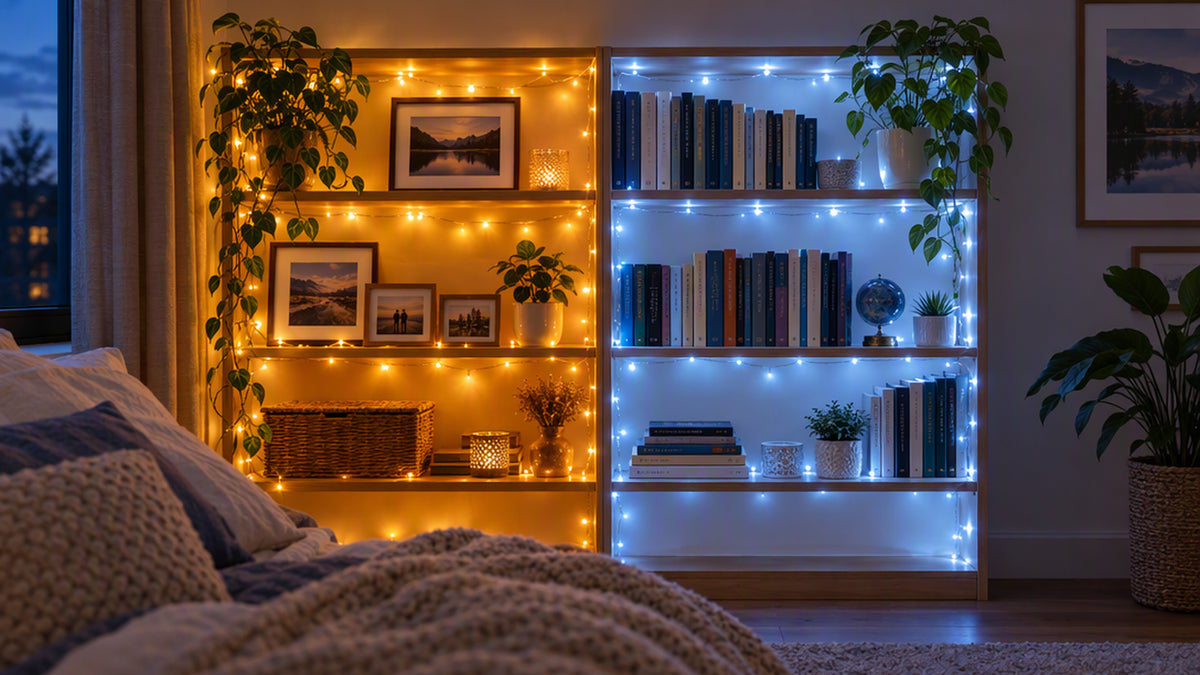
Walk down any aisle of fairy lights and the first choice you face is color. Warm white or cool white? It sounds like a small detail, but the color temperature of your lights changes how a room feels more than almost any other decision. This guide breaks down the difference, shows where each one works best, and helps you pick the right length and power type so you don't end up re-hanging everything next weekend.
What "warm" and "cool" white actually mean
Color temperature describes the tint of white light. Warm white leans toward yellow and amber, similar to a candle flame or an old-fashioned incandescent bulb. Cool white leans toward blue, closer to daylight or a bright winter morning. Neither is better; they simply create different moods.
A quick way to remember it: warm white feels cozy, and cool white feels crisp. Warm light makes wood, fabric and skin tones look softer. Cool light makes whites look cleaner and metal, glass and snow-themed decor look sharper.
Where warm white fairy lights shine
Warm white is the safe, popular choice for good reason. It works almost anywhere people want to relax.
Bedrooms and reading nooks
A strand of warm lights draped over a headboard or around a window gives you gentle ambient light that doesn't feel clinical at night. If you like winding down with a book, warm light is easier on the eyes than a stark white glow.
Living rooms and shelves
Warm strands tucked along a bookshelf, mantel or the top of a cabinet add a layered, lived-in look. They blend nicely with wood tones, woven baskets and cream or beige walls.
Patios and cozy outdoor seating
Outdoors, warm white mimics the feel of lanterns and candlelight, which is why it dominates dinner-party and patio setups. If your furniture is wood, wicker or earth-toned, warm white is almost always the right match.
For a flexible warm option, the 99ft 300 LED copper wire fairy lights in warm white run on 6 AA batteries, so you can place them where there isn't an outlet nearby. The thin copper wire is easy to bend around frames, jars and branches.
Where cool white and colored lights work better
Cool white gets overlooked, but it has real strengths.
Modern and minimalist spaces
If your room has gray walls, white furniture, chrome fixtures or lots of glass, cool white lights echo that palette instead of fighting it. Warm lights on a very cool-toned room can look slightly orange by comparison.
Winter and frost themes
For a snowy, icy look, cool white or blue is hard to beat. It pairs well with silver ornaments, white garland and faux frost. For example, the 33ft 100 LED fairy lights in blue with a remote use a silver wire and a waterproof battery box, a good fit for a winter-themed mantel or window.
Parties and kids' rooms
Colored lights such as blue or purple set a playful mood for birthdays, game nights and bedrooms. Choose the color to match the occasion, and keep one neutral strand nearby in case you want to switch back.
A simple way to decide
If you're still unsure, ask yourself three quick questions.
- What is the main color of the room? Warm walls and wood tones call for warm white. Cool grays, whites and blues call for cool white.
- What mood do you want? Relaxed and intimate points to warm. Bright, clean and festive points to cool or colored.
- How will you use it? If the lights are your main evening light, warm is gentler. If they're an accent for a themed display, color is more fun.
Still torn? Buy one strand of each and test them side by side at night before committing to a whole room. The difference is often obvious within a minute.
Don't forget length and power
Color is only half the decision. Two other details decide whether your lights look good once they're up.
Length
Measure the area before you shop. A common mistake is buying a single short strand and stretching it thin across a wall. As a rough guide, leave enough length to loop or zigzag so the lights look full rather than sparse. Longer strands, like the 99ft option above, give you room to wrap a window frame, a bed canopy or a small tree.
Battery or plug-in?
Battery-powered strands are easy to place anywhere and great for temporary decor or spots without outlets. Plug-in strands avoid battery changes and suit permanent or high-use displays. If you want a plug-in warm-toned option, the full range of string lights and fairy lights lets you compare both styles side by side.
Remote and timer features
Many people forget to turn lights off. A remote control and timer make that easy, and different lighting modes let you switch between steady glow and a gentle twinkle depending on the evening.
Tips for a better-looking display
- Stick with one color temperature per area. Mixing warm and cool strands in the same view can look unintentional.
- Hide battery boxes behind furniture, inside a basket or behind a frame for a cleaner look.
- Layer lights at different heights. A strand on the wall plus one on a shelf adds depth.
- Use removable clips or hooks instead of tape that could damage paint.
Seasonal ideas for the coming weeks
With the holidays approaching, this is a good time to plan ahead. Warm white is a classic for trees, mantels and windows, while blue and cool white suit winter themes. Browse our holiday and seasonal decorations for more ways to build a cohesive look, and grab a spare strand or two so you're not caught short on decorating day.
The bottom line
Warm white is the cozy default for bedrooms, living rooms and patios. Cool white and colors work best for modern spaces, winter themes and parties. Match the color to your room, size the length to your space, and pick battery or plug-in based on where the lights will live.
Ready to pick your glow? Explore our String Lights & Fairy Lights collection and find the right strand for your space.