
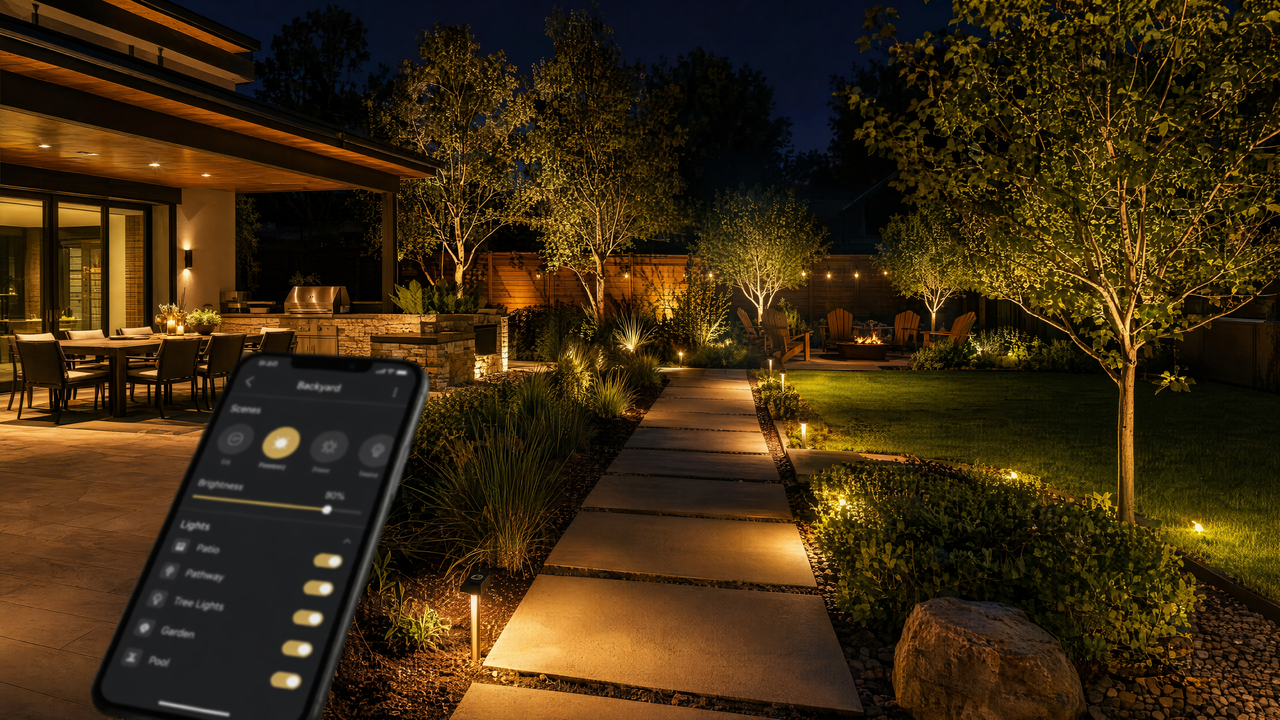
Imagine your patio lights turning on automatically at sunset, dimming after midnight, and glowing softly when motion is detected near the garden path. Smart outdoor lighting makes this possible without complex wiring or expensive electricians. According to a 2025 Statista survey, 57% of U.S. households now own at least one smart home device, and outdoor lighting is one of the fastest-growing categories. This guide walks you through everything you need to automate your backyard lights for greater convenience, lower energy bills, and improved home security.
Key Takeaways
- Automated outdoor lighting can reduce energy use by up to 30% compared to timer-free setups (U.S. Department of Energy, 2024).
- Smart plugs are the easiest entry point: no rewiring required, setup takes under 10 minutes per outlet.
- Motion sensor integration adds both security and savings by keeping lights off when no one is around.
- Sunrise-sunset automation eliminates the need to manually adjust timers as seasons change.
What Is Smart Outdoor Lighting and Why Should You Automate It?
In 2024, the global smart outdoor lighting market was valued at $1.8 billion and is projected to reach $4.3 billion by 2030, growing at a compound annual rate of 15.2% (Grand View Research, 2024). Smart outdoor lighting refers to any exterior light fixture or plug that can be controlled remotely, scheduled, or triggered by sensors without manual intervention. Unlike traditional outdoor lights that rely on a simple on-off switch, smart systems use WiFi, Zigbee, or Bluetooth to communicate with a smartphone app or a central hub.
The benefits go beyond convenience. Automated schedules ensure lights are on only when needed, which the U.S. Department of Energy estimates can cut outdoor lighting energy consumption by 20 to 30 percent. From a security standpoint, the Journal of Environmental Criminology (2023) found that homes with active outdoor lighting automation reported 39% fewer trespassing incidents than those with static or no lighting. And for homeowners who frequently forget to turn off the patio lights before bed, automation eliminates that waste entirely.
What Do You Need to Get Started with Smart Outdoor Lighting?
According to a 2025 survey by the Consumer Technology Association, 68% of first-time smart home buyers start with a plug-in device because it requires no electrical knowledge. The beauty of modern smart outdoor lighting is that most systems are designed for DIY installation. Here is what you need to evaluate before buying:
- Smart plugs (outdoor-rated): These plug into existing exterior outlets and let you control any plugged-in light fixture via an app. They are the most affordable option, typically costing $15 to $30 each.
- Smart bulbs (weatherproof): Replace standard outdoor bulbs with WiFi or Bluetooth-enabled versions. Great for sconces, post lights, and lanterns where the bulb is visible.
- Smart switches: Replace an existing wall switch to control hardwired outdoor lights. Requires basic electrical work but offers the cleanest look.
- Motion sensors: Standalone or integrated sensors that trigger lights when movement is detected. Essential for security-focused setups.
- Hub or bridge: Some systems (Philips Hue, Lutron Caseta) require a central hub for advanced features like sunrise-sunset automation and multi-light scenes.
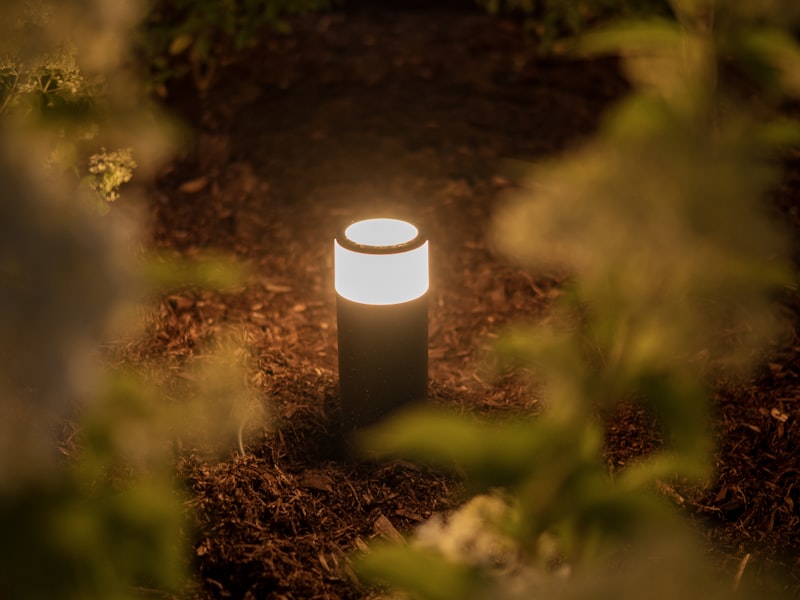
Step 1: Choose Your Smart Lighting Platform
A 2025 Parks Associates study found that 44% of smart home device owners use a single platform ecosystem, while 31% mix devices from two or more platforms. Your choice of platform determines which devices work together and how you control them. The three most common approaches are:
WiFi-based systems (Kasa, Govee, Wyze) connect directly to your home network. They are the easiest to set up and require no extra hub. Each device connects to your WiFi and is controlled through its own app. The trade-off is that WiFi devices can slow your network if you install more than 15 to 20 of them, and they stop working if your internet goes down.
Hub-based systems (Philips Hue, Lutron, Hubitat) use a dedicated bridge that communicates with devices over Zigbee or Z-Wave. These protocols create a mesh network that is more reliable than WiFi, especially for larger yards. The hub processes commands locally, so automation continues even during an internet outage. The downside is the upfront cost of the hub, typically $50 to $80.
Voice assistant ecosystems (Amazon Alexa, Google Home, Apple HomeKit) act as a control layer on top of your chosen devices. They let you group lights from different brands into routines and scenes. If you already use a voice assistant, choosing devices that support it is a smart way to keep your setup unified.
Step 2: Set Up Smart Plugs for Your Existing Outdoor Lights
In 2024, outdoor smart plugs accounted for 23% of all smart plug sales in North America (NPD Group, 2025), making them the most popular entry point for outdoor automation. Here is how to set them up:
- Check your outlet - Confirm your outdoor receptacle has a weatherproof cover and is GFCI protected. Most smart plugs are rated for wet locations but should be plugged into a covered outlet.
- Plug in and pair - Insert the smart plug, open the manufacturer's app, and follow the pairing process. Most use Bluetooth for initial setup, then connect to WiFi. This takes about 3 to 5 minutes per plug.
- Name your devices - Give each plug a descriptive name like "Patio String Lights" or "Front Path Lantern" so voice commands and automation rules are easy to set up.
- Test manually - Turn each light on and off through the app to confirm the connection is stable before creating schedules.
Pro tip: choose smart plugs that support energy monitoring. These let you track exactly how much electricity each outdoor light uses, which helps identify opportunities to tighten your schedule and save more.
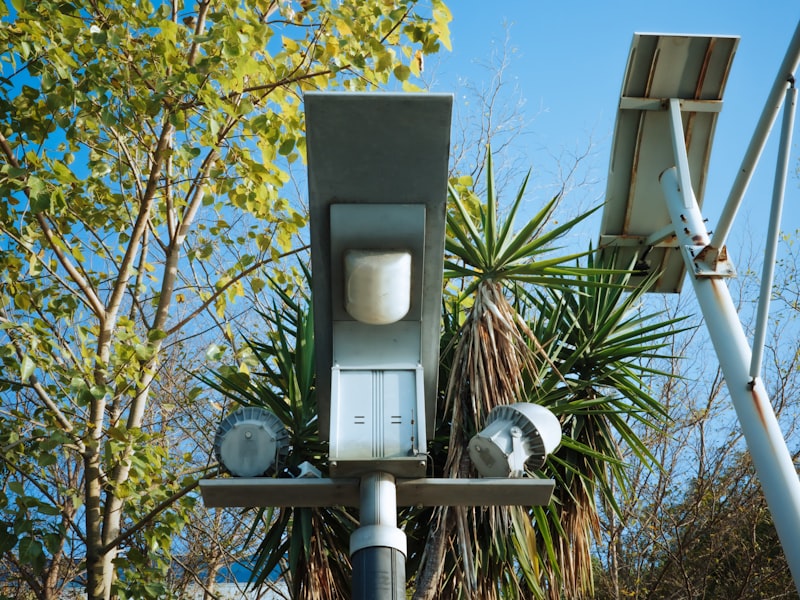
Step 3: Create Schedules and Automation Rules
A study by the Lawrence Berkeley National Laboratory (2024) found that homes using sunrise-sunset automation for outdoor lighting saved an average of $42 per year on electricity compared to fixed-timer schedules. The key to effective automation is using natural light triggers rather than fixed clock times, because sunset shifts by up to 2.5 minutes per day depending on your latitude.
Most smart lighting apps include an "astrological" or "sunrise-sunset" feature. Enable this for your outdoor lights and set the following rules:
- Sunset on - All outdoor ambient lights turn on 15 minutes before sunset so the transition is seamless.
- Bedtime dim - At 11 PM or your usual bedtime, dim patio and string lights to 30% or turn them off entirely.
- Motion-triggered bright - Security and pathway lights stay off by default but go to 100% when motion is detected after dark.
- Sunrise off - All lights turn off 15 minutes after sunrise unless motion is still active.
These four rules cover most households. You can add exceptions for weekends, holidays, or when you have guests. Once set, the system requires no daily adjustment, even as the seasons change.
Step 4: Add Motion Sensors for Security and Energy Savings
The U.S. Department of Energy reports that motion-activated lighting can reduce outdoor electricity consumption by up to 50% compared to lights left on all night. Modern motion sensors have improved significantly: a 2025 review by Security Sales & Integration found that passive infrared (PIR) sensors now have a false-alarm rate below 3% when properly positioned.
For best results, place motion sensors at these key locations:
- Entry points - Front door, back door, and garage entrance. These cover the most common approach paths.
- Dark corners - Side yards and areas where shadows create hiding spots. A well-placed sensor eliminates blind zones.
- Driveway and walkway - Illuminate the path for arriving guests and delivery drivers. Set the sensor to activate lights along the approach route.
Adjust the sensitivity and timeout settings based on your yard's layout. A 30-second to 2-minute timeout is standard for pathway lights, while security lights near entry points can stay on for 5 minutes after detection to give you time to reach the door.
Common Mistakes to Avoid When Automating Outdoor Lights
Over several years of helping homeowners set up smart outdoor systems, a few patterns emerge as the most common pitfalls. The first is ignoring the weather rating. Outdoor-rated devices carry an IP rating: IP64 is sufficient for splashing rain, while IP65 or higher is recommended for exposed locations. Installing indoor-rated devices outdoors leads to failure within months, often during the first heavy rain.
The second mistake is overloading a single smart plug. Most outdoor smart plugs are rated for 15 amps (1,800 watts). Plugging multiple high-wattage fixtures like floodlights into one plug can trip the breaker or damage the device. Always check the combined wattage of everything connected to a single plug.
The third is scheduling without considering seasonal changes. A fixed schedule that works in summer (lights on at 8 PM, off at 11 PM) leaves your yard dark at 6 PM in December. Use sunrise-sunset automation to avoid this, and your lights will adjust automatically throughout the year.
Frequently Asked Questions
Do I need an electrician to install smart outdoor lighting?
No. Smart plugs and smart bulbs are plug-and-play and require no electrical work. Smart switches that replace wall switches do require basic electrical knowledge, but most outdoor automation projects need only plug-in devices.
Can smart outdoor lights work during a power outage?
Standard smart lights stop working during a power outage because they rely on WiFi and mains power. However, hub-based systems with battery backup, like some Lutron setups, can retain basic on-off schedules for up to 24 hours during an outage.
How much can I save by automating my outdoor lights?
The U.S. Department of Energy estimates homeowners save 20 to 30 percent on outdoor lighting energy costs by switching to automated schedules. Adding motion sensors can increase savings to up to 50 percent for security and pathway lights.
Will smart outdoor lights work with my existing voice assistant?
Most major smart lighting brands support Amazon Alexa and Google Home. Apple HomeKit support is more limited but available on select brands like Lutron and Philips Hue. Check the product specifications before buying.
How long do smart outdoor bulbs and plugs typically last?
Quality outdoor smart plugs last 3 to 5 years in normal weather conditions. LED smart bulbs are rated for 15,000 to 25,000 hours, which translates to roughly 5 to 7 years of nightly use. UV exposure and extreme temperatures can shorten lifespan.
Conclusion
Automating your outdoor lighting is one of the highest-return smart home upgrades you can make. The upfront investment is modest: a few smart plugs and a motion sensor typically cost $50 to $120 total. The payoff includes lower electricity bills, enhanced security, and the simple pleasure of arriving home to a warmly lit entryway without lifting a finger.
- Start with smart plugs for your existing string lights and lanterns for the fastest return on investment.
- Enable sunrise-sunset automation so your schedule adjusts with the seasons automatically.
- Add motion sensors at entry points to maximize both security and energy savings.
- Choose a single platform and stick with it to keep your system reliable and easy to manage.
Ready to get started? Browse our collection of outdoor lighting solutions to find the perfect fixtures for your automated setup.
1. Grand View Research — "Smart Lighting Market Size, Share & Trends Analysis Report, 2024-2030", retrieved 2026-08-17, https://www.grandviewresearch.com/industry-analysis/smart-lighting-market
2. U.S. Department of Energy — "Outdoor Lighting Energy Savings", retrieved 2026-08-17, https://www.energy.gov/energysaver/outdoor-lighting
3. Consumer Technology Association — "Smart Home Buyer Survey 2025", retrieved 2026-08-17, https://www.cta.tech/Resources/i3-Magazine/i3-2025/Smart-Home-Adoption
4. Parks Associates — "Smart Home Ecosystem Adoption 2025", retrieved 2026-08-17, https://www.parksassociates.com/smart-home-ecosystem
5. Lawrence Berkeley National Laboratory — "Residential Lighting Automation Energy Impact Study", 2024, retrieved 2026-08-17, https://www.lbl.gov/
6. NPD Group — "Connected Home Devices Market Tracker 2025", retrieved 2026-08-17, https://www.npd.com/
7. Security Sales & Integration — "Motion Sensor Technology Review 2025", retrieved 2026-08-17, https://www.securitysales.com/