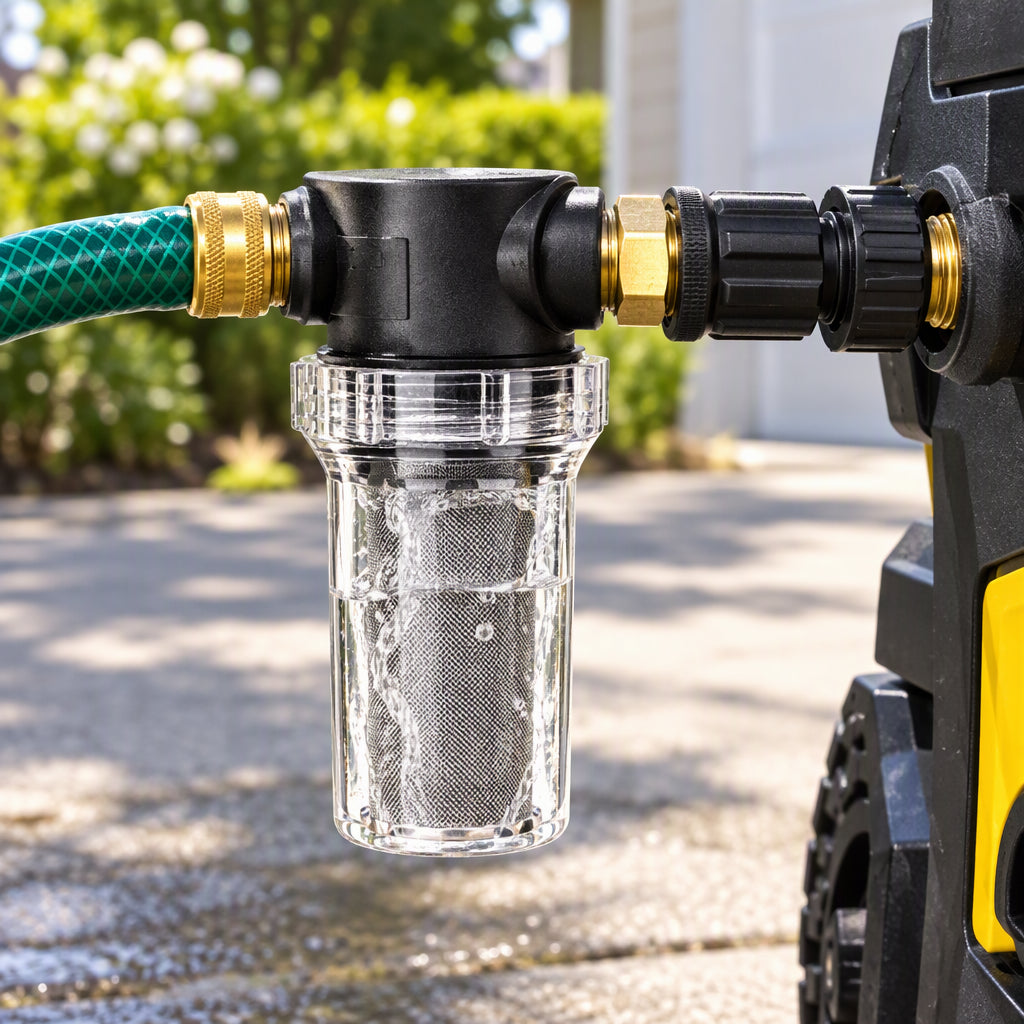
Do You Need an Inline Hose Sediment Filter for Your RV or Well Water?
If your water source is a well, a campground spigot, or any tap you can't fully vouch for, yes — an inline sediment filter is cheap insurance for whatever you connect downstream, whether that's a pressure washer, an RV's plumbing, or just a garden hose feeding a sprinkler system. If you're on municipal city water with no history of grit or discoloration, you likely don't need one for everyday watering, but it's still worth adding ahead of a pressure washer pump specifically.
What it actually filters and why that matters
The Inline Hose Sediment Filter uses a 100-mesh and a 40-mesh screen (you choose which to install) to catch particles down to about 450 microns — roughly the size of fine sand. That's not fine enough to purify drinking water, but it's exactly the size range of grit, rust flakes, and sediment that causes two specific problems:
- Pump and seal wear. A pressure washer pump has tight tolerances inside; grit that gets past the inlet accelerates wear on seals and valves, which is a far more expensive repair than a $18 filter.
- O-ring and fitting damage. Grit is one of the main things that scores the sealing surface on quick-connect O-rings, leading to the leaks covered in our O-ring troubleshooting guide.
Who should install one
- Well water users: well systems commonly carry fine sediment, sand, or mineral particles that city water doesn't — this is close to a must-have if you're running a pressure washer off a well.
- RV and camping use: campground water quality varies a lot site to site, and a filter at the RV's fresh water inlet protects the rig's internal plumbing from whatever happens to be in that particular spigot.
- Car washing with a pressure washer: protects the pump regardless of water source, since pressure washers run at higher internal tolerances than a simple garden hose nozzle.
- Standard garden hose watering on city water: lowest priority of the four — city water is filtered before it reaches your tap, so the main benefit here is catching whatever sediment has built up inside old garden hoses themselves, not the water source.
Installing it correctly
This is a 3/4" inline fitting rated to 80 PSI max — connect one end directly to your water source (the pressure washer's water inlet, an RV's fresh water port, or an outdoor spigot), then connect your garden hose to the other end. Installing it backward won't damage anything, but it also won't filter correctly, so make sure the water flows from source → filter → hose, not the reverse. The two mesh screens are swappable depending on how fine a filter you want — start with the 40-mesh for general sediment and switch to the 100-mesh if you're seeing fine particles getting through.
One limit to know before you rely on it
At 80 PSI max, this filter sits upstream of the pressure washer pump, not downstream in the high-pressure line — it's protecting the water going in, not filtering the pressurized spray coming out. Disconnect it when not in use, same as any other hose fitting, rather than leaving it under pressure.