
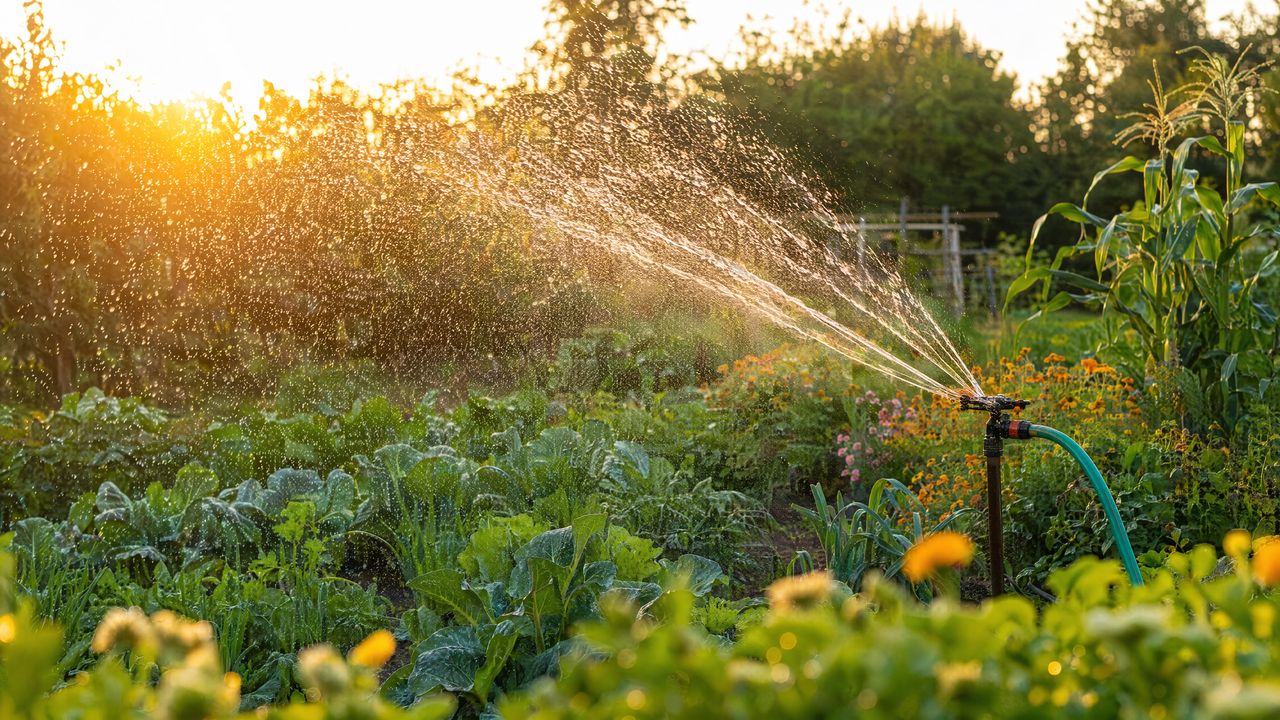
By mid-August, most gardens are running on fumes. The soil dries faster than in June, container plants wilt by lunchtime, and lawns start showing crispy patches that no amount of hope will fix. The difference between a garden that limps into fall and one that finishes strong usually comes down to one skill: watering correctly during heat waves. Not more often — correctly.
The Golden Rule: Deep and Infrequent Beats Shallow and Daily
A light daily sprinkle feels responsible, but it trains roots to stay near the surface — exactly where soil is hottest and dries first. Deep, less frequent watering pushes moisture 6–8 inches down, and roots follow it into cooler, damper soil where they can ride out a scorcher.
As a working baseline in hot weather:
- Vegetable gardens: 2–3 deep waterings per week, about 1–1.5 inches total
- Established lawns: 2 deep sessions per week rather than daily sprinkles
- Flower beds and shrubs: 1–2 deep soakings per week, more for first-year plantings
- Containers and hanging baskets: the exception — daily, sometimes twice daily above 90°F, since pots dry out in hours
The finger test beats any schedule: push a finger two inches into the soil. Dry at that depth? Water deeply. Still moist? Wait a day, even if the surface looks parched.
Water Early — It Matters More Than You Think
The best window is 5–9 a.m. Cooler air and calm winds mean far less water lost to evaporation, and foliage that gets splashed has all day to dry, which prevents the fungal problems that plague evening waterers. If mornings are impossible, late afternoon is second best — just aim at the base of plants and keep leaves as dry as you can.
Slow Water Wins: Let the Soil Actually Drink
When soil is bone dry, it repels water at first — blast it with a hard jet and most of it runs off into the path. A slow, gentle flow gives soil time to re-wet and absorb. This is where an adjustable nozzle earns its keep: twist to a soft shower for beds and containers, then to a stronger stream for rinsing walkways. A solid brass one like the Twinkle Star heavy-duty brass adjustable twist hose nozzle (2 pack) won't crack in the heat the way plastic heads do, and the twist control makes it easy to dial in a gentle soak. For stubborn dry spots, water in two passes: a light first pass to break the surface tension, then a longer soak ten minutes later.
Make Watering Frictionless (You'll Do It More)
The honest reason gardens die in August isn't ignorance — it's that dragging hoses and screwing fittings on and off in 95°F heat is miserable, so we skip a day, then two. A few cheap upgrades remove the friction:
Quick connectors end the thread-twisting
Snap-on 3/4-inch quick connector sets let you switch between a nozzle, a sprinkler, and an open hose end in one click. When changing attachments takes two seconds instead of two minutes of cross-threading, you'll actually give the tomatoes their second deep soak.
A shut-off valve saves walks to the spigot
A small brass shut-off valve at the hose end lets you pause the flow right where you're standing — handy when moving between beds, and it stops the pressure-surge drips that wear out washers.
Check for leaks — they're stealing your water
A steady drip at the spigot can waste hundreds of gallons a month, and in a heat wave that's water your plants needed. Five minutes with fresh rubber washers usually solves it; we covered the full diagnosis in our guide to fixing leaky garden hose connections. All of these small parts — connectors, valves, washers, splitters — live in our garden watering and hose fittings collection.
Mulch: The Cheapest Irrigation System Ever Invented
Two to three inches of mulch — shredded bark, straw, even grass clippings — can cut soil evaporation dramatically. Mulched beds stay damp days longer than bare ones, which means every gallon you apply works harder. If you do only one non-watering task this month, mulch the beds you water most.
Know When NOT to Water
A wilted plant at 3 p.m. isn't always thirsty — many plants droop in afternoon heat to conserve moisture and perk up by evening. Check the soil before reaching for the hose. And if your lawn has already gone brown and dormant, let it be: dormant grass is alive at the crown and will green up with fall rain. Watering it heavily now just feeds weeds.
Finish the Season Strong
Deep soaks two or three times a week, early mornings, slow flow, mulch, and gear that makes the job painless — that's the whole formula. Your garden doesn't need more water in August; it needs smarter water.
Gear up before the next heat wave: browse the full Garden Watering & Hose Fittings collection for brass nozzles, quick connectors, splitters, and shut-off valves built to last more than one summer.