
Last updated: July 12, 2026
By mid-July, most American gardens are fighting the same battle: long stretches of 90-degree days, thirsty tomato plants, and lawns that crunch underfoot. The instinct is to water more — but the gardeners whose beds stay lush through August aren't necessarily using more water. They're watering smarter. This guide covers when to water, how much, and the small hose upgrades that make the whole routine faster and less wasteful.
Water Early in the Morning (Really)
The single biggest improvement most gardeners can make is timing. Watering between 5 and 9 a.m. means less evaporation, so more water actually reaches the roots. Midday watering can lose 30–50% of the water to evaporation before it soaks in, and it does little to cool plants down. Morning watering also gives foliage time to dry before nightfall, which cuts down on fungal diseases like powdery mildew.
If mornings are impossible, early evening (after 6 p.m.) is the next best window. Just aim the water at the soil, not the leaves, so foliage isn't wet overnight. And if you're out in the garden at dusk anyway, it's a nice moment to enjoy your landscape — a few solar path lights and outdoor lighting along the beds make evening watering rounds a lot more pleasant.
Water Deeply, Not Frequently
Shallow daily sprinkles train roots to stay near the surface, where soil dries out fastest. Deep, less frequent watering encourages roots to grow downward, where moisture holds longer. For most vegetable gardens and flower beds:
- Aim for about 1–1.5 inches of water per week, delivered in 2–3 deep sessions rather than daily light ones.
- Check with the finger test: push a finger two inches into the soil. If it's dry at that depth, it's time to water.
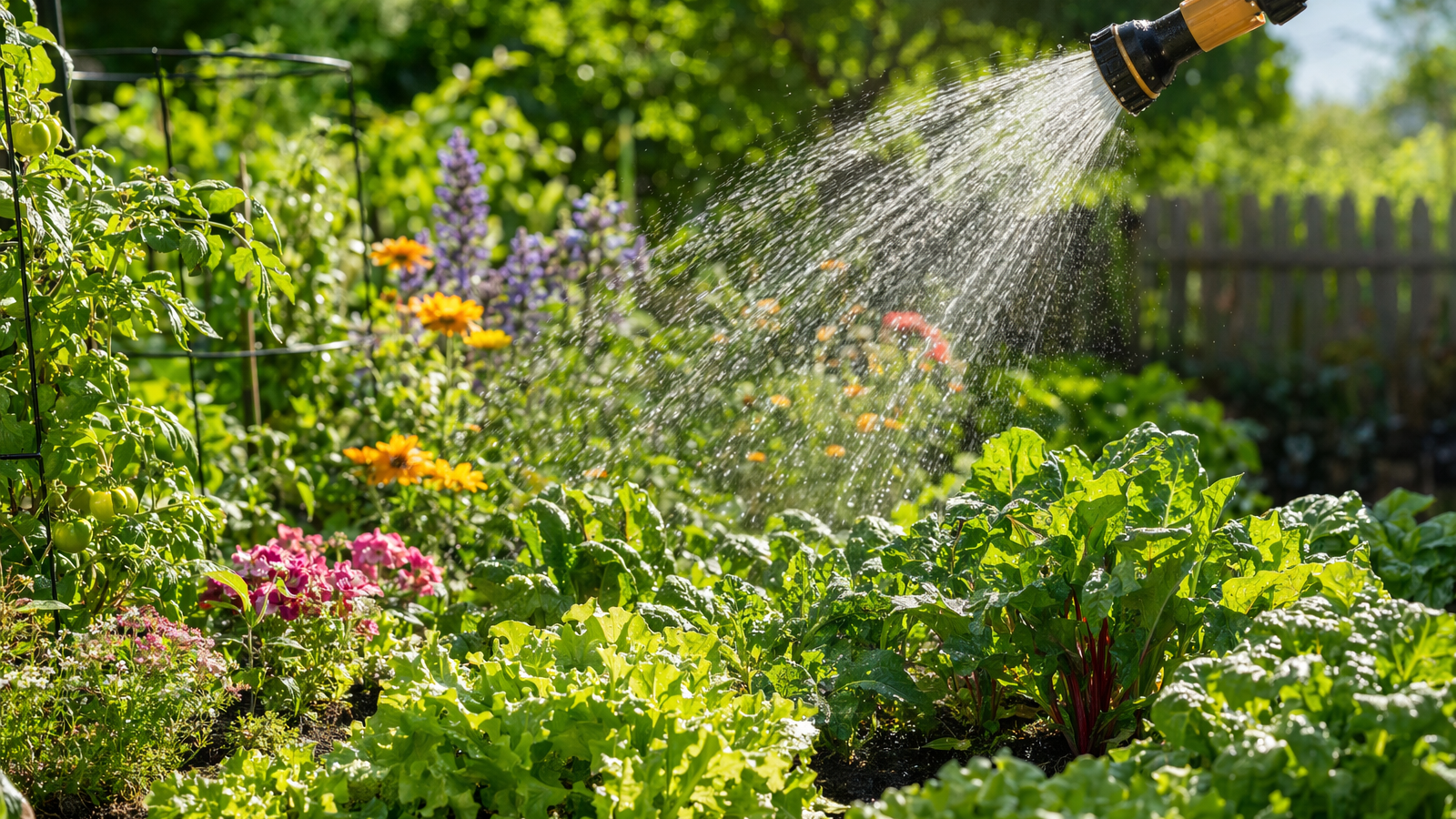
- Slow the flow. Water that runs off the surface isn't helping. A gentle shower pattern or a soaker setup lets water percolate instead of pooling.
Containers are the exception — pots dry out fast in July and may genuinely need daily watering, sometimes twice on scorching days.
Build a Hose Setup That Doesn't Fight You
Ask any gardener what they hate about summer watering and you'll hear the same things: dragging the hose across the yard, walking back to the spigot to shut the water off, and wrestling with leaky connections. All three are solvable with a few inexpensive brass fittings from our garden watering and hose fittings collection.
Add a Shut-Off Valve at the Nozzle End
A small inline valve between your hose and nozzle lets you stop the flow right where you're standing — no more trudging back to the spigot every time you move the sprinkler or swap attachments. A solid brass option like the Twinkle Star heavy-duty brass shut-off valve (2 pack) won't crack or corrode the way plastic valves do after a season or two in the sun. Keep one on the hose and one at the splitter.
Switch to Quick Connectors
If you rotate between a spray nozzle, a sprinkler, and a soaker hose, threading and unthreading attachments gets old fast — and cross-threaded fittings are the number one cause of leaks. Quick-connect fittings snap on and off in one motion. A set like the 3/4-inch garden hose quick connector set (4 pack) lets you outfit every attachment you own, so switching from watering the tomatoes to running the sprinkler takes about two seconds.
Use a Splitter to Run Two Zones
A two- or four-way brass splitter on the spigot lets you leave a soaker hose connected in the vegetable bed while keeping a regular hose free for everything else. Each outlet has its own valve, so you can run a slow drip on the beds while you hand-water containers.
Mulch: The Watering Trick That Isn't Watering
Two to three inches of mulch — shredded bark, straw, or even grass clippings — can cut soil moisture loss by up to 70%. Mulch keeps roots cooler, blocks weeds that compete for water, and prevents the crusty, hydrophobic soil surface that makes water run off instead of soaking in. If you do only one non-watering task this month, make it mulching.
Know the Signs of Heat Stress vs. Thirst
Not every droopy plant needs water. Many plants (squash and hydrangeas are famous for it) wilt in afternoon heat even when soil is moist, then bounce back by evening. Watering them again just drowns the roots. Check the soil before you reach for the hose:
- Wilting + dry soil two inches down = water deeply now.
- Wilting + moist soil = heat stress; leave it alone and re-check after sunset.
- Yellowing lower leaves + soggy soil = overwatering; skip a session and improve drainage.
A Simple July Watering Routine
Putting it all together, here's a routine that keeps most gardens healthy through the hottest weeks:
- Morning (2–3x per week): deep-water beds and lawn early, using a shower setting or soaker hose aimed at the soil.
- Daily: check containers and hanging baskets; water until it drains from the bottom.
- Weekly: inspect hose washers and connections for leaks — a dripping coupling can waste hundreds of gallons a month.
- Monthly: top up mulch anywhere soil is showing.
None of this requires expensive irrigation systems — just good timing, a bit of technique, and fittings that don't leak or fight you. You can see what other gardeners are picking up most in our best sellers collection.
Ready to Upgrade Your Watering Setup?
A couple of well-made brass fittings turn summer watering from a chore into a five-minute morning routine. Browse the full Garden Watering & Hose Fittings collection for shut-off valves, quick connectors, splitters, and nozzles built to last more than one season.