
Last updated: July 12, 2026
Solar lights promise the best kind of outdoor lighting: no wiring, no outlets, no electric bill. But anyone who has bought a set knows the frustration when they glow dimly or die by 10 p.m. In almost every case, the problem isn't the light — it's where it's placed. Here's how solar garden lights actually work, how much sunlight they really need, and how to get the most out of them.
How Solar Garden Lights Work
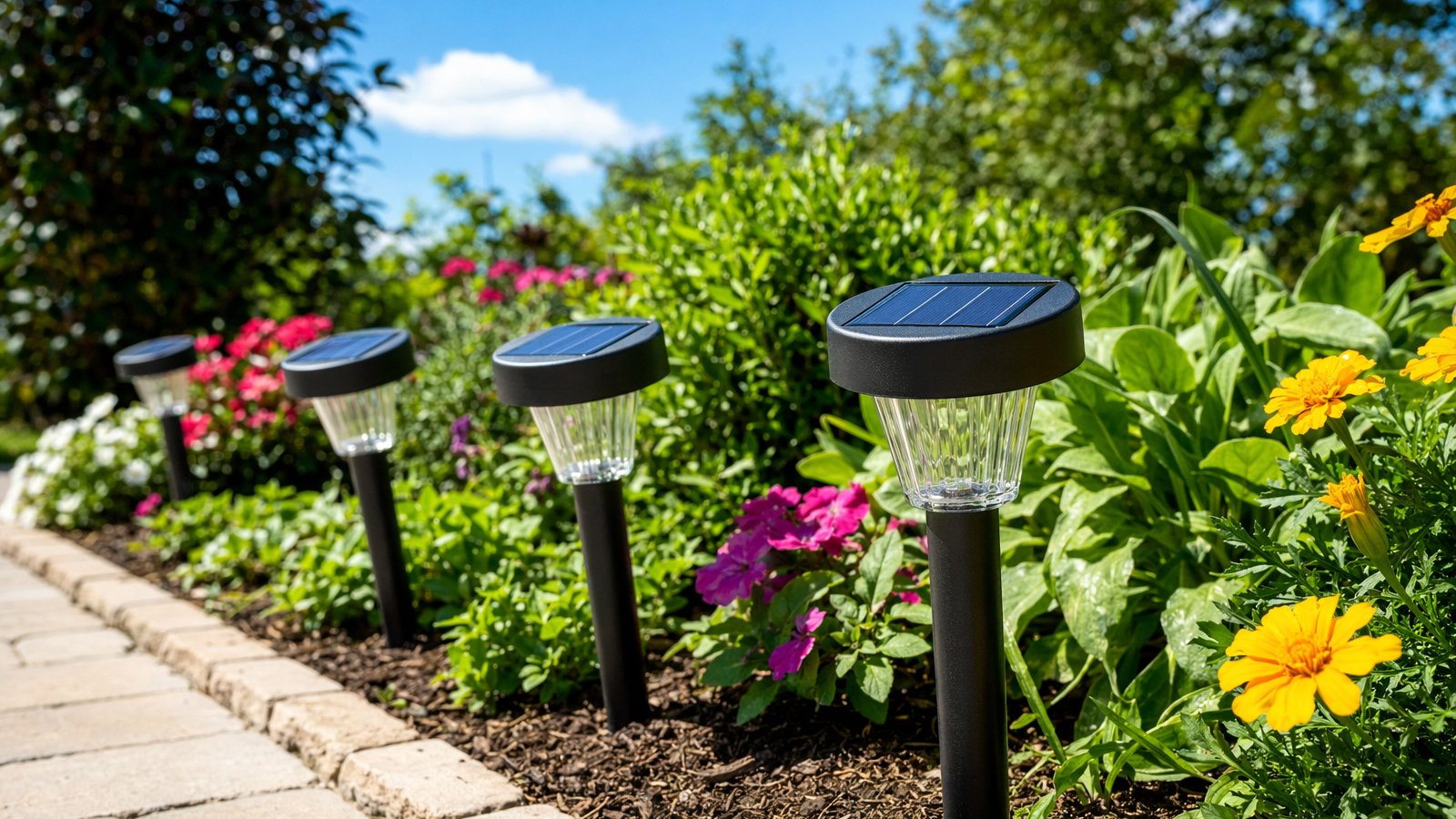
Every solar light has four parts: a small photovoltaic panel, a rechargeable battery, an LED, and a light sensor. During the day, the panel converts sunlight into electricity and stores it in the battery. When the sensor detects darkness, the LED switches on automatically and runs off the stored charge until morning or until the battery runs out.
That last phrase is the key. Runtime is entirely determined by how much charge the panel collected during the day — which is why placement matters more than any spec on the box.
So, Do They Need Direct Sunlight?
Direct sun is not strictly required, but it makes a dramatic difference. As a rule of thumb:
- 6–8 hours of direct sun = full charge, typically 8–10 hours of light.
- 4–6 hours of partial sun = usable but shorter runtime, often 4–6 hours.
- Full shade or indirect light only = weak charge; lights may only run 1–2 hours or glow dimly.
Cloudy days still charge the battery — just at roughly 30–50% efficiency. A string of cloudy days in a row is usually why lights that worked fine all summer suddenly seem weak.
Placement Rules That Actually Matter
Point the Panel South (in the US)
In the northern hemisphere, a south-facing panel catches the most sun over the day. For staked pathway lights this happens naturally if the path runs east-west; for lights with adjustable panels, tilt them toward the southern sky.
Watch for Moving Shade
A spot that's sunny at 9 a.m. can be shaded by 1 p.m. as trees, fences, and rooflines cast different shadows. Before committing, check your intended spot at midday and mid-afternoon. Even two hours of afternoon shade meaningfully cuts the charge — afternoon sun is the strongest of the day.
Keep Panels Away from Night Light Sources
Porch lights and bright street lamps can trick the sensor into thinking it's still daytime, so the light never turns on — or flickers on and off. Keep solar lights at least a few feet away from other light sources.
Separate the Panel from the Light When Possible
Many solar string lights and lanterns have a panel on a stake connected by a cord. That means the lights themselves can hang under a covered patio or pergola while the panel sits out in full sun. A set like the Twinkle Star solar string lights (2 pack) works this way — wrap the strands through trees or along a fence, then plant the panel wherever the sun hits hardest.
Where Solar Lights Shine (Literally)
Pathways and driveways: the classic use. Space staked lights 6–8 feet apart, alternating sides for even coverage. A multi-pack like the 12-pack solar pathway lights covers a typical front walk and driveway edge in one go.
Garden beds: use them to outline borders or highlight plants. The soft glow flatters foliage without the harshness of wired floodlights.
Fences and trees: solar string lights add ambiance with zero wiring — browse the full outdoor and solar lights collection for lanterns, pathway stakes, and string options, or mix in low-voltage string and fairy lights where you do have an outlet nearby.
Simple Care That Doubles Their Lifespan
- Wipe the panel monthly. Dust, pollen, and bird droppings can cut charging efficiency by 30% or more. A damp cloth is all it takes.
- Trim overgrowth. Plants grow — a panel that was sunny in April may be under a hosta leaf by July.
- Replace batteries every 1–2 years. Most solar lights use standard rechargeable AA or AAA NiMH batteries. When runtime drops sharply, a fresh battery usually restores it — no need to toss the whole light.
- Store or shelter in deep winter if you're in a harsh climate. Cold reduces battery capacity, and ice can crack cheap housings.
Quick Troubleshooting
- Light won't turn on at night: check for a pull-tab on the battery, make sure the switch is ON, and move it away from porch lights.
- Dim or short runtime: clean the panel, confirm 6+ hours of sun, replace the rechargeable battery.
- Works intermittently: usually corrosion on battery contacts — a pencil eraser cleans them up.
Light Up Your Yard Without Wiring a Thing
Placed with a little care, good solar lights run all evening, all season, for free. Explore the Outdoor & Solar Lights collection for pathway lights, hanging lanterns, and solar string lights ready for your sunniest spots.